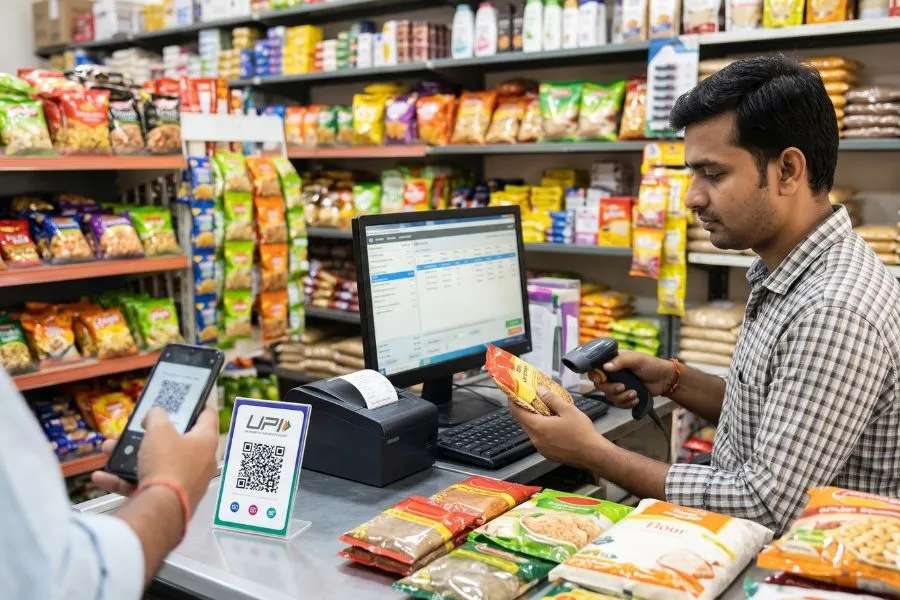
It is Monday morning at a ceramic floor tile manufacturing unit in Morbi, Gujarat.
The plant manager, Chandrakant, is dealing with four crises before the production meeting:
Crisis 1 — Shade Mismatch Disaster:
A prestigious real estate developer in Mumbai has called — furious. The second batch of 3,000 sq.m. of porcelain vitrified tiles delivered last week looks visibly different in shade compared to the first batch delivered a month ago. The colour variation is apparent to the naked eye when tiles from both batches are laid side by side. The developer is threatening to reject the entire second batch and demand a ₹28 lakh refund plus labour costs.
Chandrakant needs to know: What was the body mix composition of Batch 1 vs Batch 2? Was the same colour oxide used? Was the glaze from the same lot? Were the kiln temperature profiles the same? All this information is in separate handwritten registers across the body preparation department, the glaze kitchen, and the kiln control logbook. Compiling and comparing will take 3 days. The developer wants an answer in 24 hours.
Crisis 2 — Inventory of Finished Tiles:
A dealer from Rajasthan wants to place an urgent order — 8,000 sq.m. of a specific SKU (600×600mm Matt Beige). How much is in stock? The finished goods warehouse register shows 12,400 sq.m. But the warehouse supervisor says physical stock is much lower — many tiles were broken or damaged in storage and the register wasn’t updated. The sales team doesn’t know whether to confirm the order or not.
Crisis 3 — Raw Material Crisis:
The body preparation department is almost out of ball clay. The production plan calls for 45 tonnes of ball clay per day. The supplier is 4 days late on a consignment. The alternative supplier’s ball clay has different plasticity properties — if used as a direct substitute without adjusting the body mix, the tiles will warp during firing. The body preparation team is improvising without consulting the quality team.
Crisis 4 — GST Complexity:
The accounts team has flagged a problem — several invoices for wall tiles were billed under HSN 6908 (glazed ceramic tiles) while the customer’s GST consultant says they should be under HSN 6907 (unglazed ceramic tiles) for the specific unglazed product line. Both attract 18% GST, but the ITC reconciliation in GSTR-2B is showing mismatches.
Four crises. One root cause: No integrated ERP for ceramic manufacturing.
India’s ceramic industry is one of the world’s most significant — and Morbi, Gujarat, is the world’s second-largest ceramic tile manufacturing hub, producing over 700 million square metres per year and exporting to 150+ countries. India is the 2nd largest ceramic tile producer globally, with a ₹55,000 crore annual market growing at 10-12% annually.
Yet a significant proportion of India’s 700+ ceramic manufacturing units — including many mid-size and large tile manufacturers — operate without integrated ERP systems, managing body mix composition in manual registers, kiln operations through paper logbooks, and shade batch records in spreadsheets.
This complete guide covers everything Indian ceramic and tile manufacturers need to know about ERP software — from body mix and kiln management to shade batch control, finished goods inventory, GST compliance, and dealer communication.
Explore ERP Group’s Manufacturing & Industry Solutions → for India’s most integrated ceramic manufacturing ERP platform.
India’s Ceramic Industry — The Landscape
Scale, Structure, and Global Significance
Industry Overview 2026
Industry Size:
- ₹55,000 crore annual ceramic products market
- 2nd largest ceramic tile producer globally
- 700 million+ sq.m. annual production capacity
- Morbi, Gujarat: 700+ ceramic units, 2nd largest tile hub globally
- Growing at 10-12% annually (driven by real estate boom)
Market Segments:
| Segment | Market Share | Key Products |
|---|---|---|
| Vitrified tiles (PVT/GVT) | 45% | Floor tiles, large format |
| Ceramic wall tiles | 25% | Bathroom, kitchen walls |
| Floor tiles (non-vitrified) | 15% | Economy floor applications |
| Sanitaryware | 8% | Washbasins, toilets, bathtubs |
| Roof tiles, terracotta | 4% | Roofing, décor |
| Technical ceramics | 3% | Industrial applications |
Geographic Clusters:
| State | Specialty | Key Cities |
|---|---|---|
| Gujarat | All tile segments, export | Morbi, Wankaner, Rajkot |
| Rajasthan | Marble, stone, kota tile | Kishangarh, Jaipur, Kota |
| Tamil Nadu | Vitrified, floor tiles | Vellore, Ranipet, Ariyalur |
| Andhra Pradesh | Roof tiles, floor tiles | Narsapur, Eluru, Khammam |
| Maharashtra | Sanitaryware, décor | Akola, Amaravati |
| Himachal Pradesh | Floor and wall tiles | Baddi, Solan |
The Ceramic Manufacturing Complexity:
What makes ceramic manufacturing uniquely demanding:
- Body mix precision — Tile body composition (clay, feldspar, silica ratios) determines strength, absorption, and dimensional properties
- Shade batch management — Colour consistency between production batches is the #1 quality issue (Chandrakant’s Crisis 1)
- Kiln process control — Temperature curve, firing time, and atmosphere affect colour, strength, and warpage
- High-volume, high-SKU production — One factory may produce 50-100+ SKU combinations (size × surface × shade)
- Square metre-based inventory — Tiles tracked in square metres and pieces, with different sizes requiring conversion
- Dealer network complexity — Thousands of dealers across India and export markets
- Shade lot management at dealer — Dealers must know which shade lots are available to avoid mixing
- Export documentation — Significant export to Middle East, Africa, and Southeast Asia
For ERP Group’s complete industry solutions, visit Industries →.
The 6 Core Problems ERP Solves for Ceramic Manufacturers
The Daily Operational Challenges That Cost Most
Problem 1 — Shade Batch Management and Traceability
The Pain:
The most expensive and relationship-damaging quality problem in ceramic manufacturing is shade variation between batches. Even when tiles have the same nominal specification, subtle differences in:
- Body mix mineral percentages
- Colour oxide quantity
- Glaze lot
- Kiln temperature curve
- Firing atmosphere (oxidising vs reducing)
...can create visible colour differences that only appear when tiles are laid side by side.
Without a system linking each production batch to its complete body mix composition, glaze lot, and kiln firing record, investigating a shade complaint (as in Chandrakant’s Crisis 1) requires days of manual archive searching.
The ERP Solution:
Complete batch record from body preparation through pressing, glazing, firing, and finished goods. Every batch assigned a unique shade lot number. All production parameters linked to that shade lot. Customer sales linked to shade lots. Shade complaint investigation in 30 minutes.
Problem 2 — Finished Goods Inventory by Shade Lot
The Pain:
Ceramic tiles are not just tracked by SKU (product size and type) — they must be tracked by shade lot number. A dealer ordering 8,000 sq.m. of 600×600 Matt Beige needs material from the SAME shade lot (or approved shade lots) — mixing shade lots creates the field problem in Crisis 1.
Without shade lot inventory, the finished goods register shows total stock by product — but not by shade lot. An order may be confirmed, but the warehouse delivers tiles from two shade lots, creating the shade mismatch problem at the customer’s site.
The ERP Solution:
Finished goods inventory tracked by SKU × shade lot × grade (1st sort, 2nd sort, random). Sales orders specify required shade lot. Dispatch from single shade lot or confirmed compatible shade lots only.
Problem 3 — Body Mix Raw Material Management
The Pain:
Ceramic body composition is precisely engineered. Ball clay provides plasticity. Feldspar provides flux for vitrification. Silica provides the glass-forming matrix. China clay provides whiteness and strength. Each mineral from each mining location or supplier has slightly different chemical properties.
When a raw material lot changes (new mining batch, new supplier), the body mix recipe must be adjusted. Without digital body mix records:
- Ball clay lot changes go unrecorded
- Body technologist adjusts mix intuitively, without documentation
- When shade problems occur, the link between body mix change and colour shift can’t be established
The ERP Solution:
Digital body mix formula management. Every production batch references a specific mix formula version. When a raw material lot changes (different supplier, different mine), the body technologist creates a new mix formula version. Traceability from raw material lot to batch to shade outcome.
Problem 4 — Kiln Utilisation and Scheduling
The Pain:
The kiln (roller kiln, tunnel kiln) is the most capital-intensive asset in ceramic manufacturing — costing ₹15-40 crore for a single tile kiln. Its utilisation directly determines the plant’s profitability.
Without production planning data:
- Kiln running at 70% utilisation when 90% is achievable
- Product changeover time (size changes, glaze changes) not optimised
- Kiln temperature profile not linked to batch records (making root cause analysis of warpage/dimension problems impossible)
The ERP Solution:
Kiln production planning to maximise utilisation. Product changeover optimisation. Digital kiln log linked to batch records. Temperature deviation alerts.
Problem 5 — Dealer Stock and Shade Lot Visibility
The Pain:
Tile dealers face the shade lot problem from the other side. A customer comes to a dealer wanting 150 sq.m. of a specific tile. The dealer needs to know: Do I have enough stock from the same shade lot? If not, can I order the same shade lot from the manufacturer?
Without a dealer-facing shade lot visibility system, dealers ship mixed shade lots without realising — creating customer complaints at installation.
The ERP Solution:
Dealer-accessible stock visibility showing available quantity by SKU and shade lot. Sales order shade lot specification. Manufacturer-to-dealer shade lot tracking.
Problem 6 — Multi-Rate GST and HSN Classification
The Pain:
Ceramic products span multiple HSN codes under Chapter 69 — and the classification depends on whether tiles are glazed or unglazed, which type of ceramic body they have, and whether they’re for walls or floors. Getting it wrong creates ITC mismatches.
The ERP Solution:
Product master with validated ceramic HSN codes. Correct rate applied automatically. GSTR-1 compiled accurately.
For GST compliance, use ERP Group’s GST invoicing system →.
For ceramic HSN codes, use ERP Group’s HSN/SAC Finder →.
The 18 Essential ERP Modules for Ceramic Manufacturing
The Complete Module Architecture
Module 1-3: Body Mix Management and Production Planning
The Technical Core of Ceramic ERP
Module 1 — Body Mix Formula Management
The Ceramic Body — Engineering at Scale:
A ceramic tile body is a carefully engineered mixture of minerals. The standard body composition for a vitrified tile:
BODY MIX FORMULA: PVT-600-STANDARD
Product Application: 600×600mm Porcelain Vitrified Tile
Formula Version: v8.3 (Current Approved)
Approved: September 2, 2026 | Approved by: Body Technologist

RAW MATERIALS (per tonne of dry body mix):

PLASTIC MATERIALS:
  Ball Clay (PC-4 grade, UK/India): 25% → 250 kg
    Function: Plasticity for press forming, binds particles
    Spec: L* whiteness min 85, plasticity index 28-35

  China Clay (Calcined, Rajasthan): 15% → 150 kg
    Function: Whiteness, strength, reduces shrinkage
    Spec: Al₂O₃ min 37%, Fe₂O₃ max 0.5%

NON-PLASTIC MATERIALS:
  Feldspar (Sodium, Rajasthan/AP): 38% → 380 kg
    Function: Flux — promotes vitrification at 1,200°C
    Spec: K₂O+Na₂O min 11%, Fe₂O₃ max 0.25%

  Silica Quartz (200 mesh): 12% → 120 kg
    Function: Glass-forming oxide, dimensional stability
    Spec: SiO₂ min 98.5%, Fe₂O₃ max 0.05%

OTHER MATERIALS:
  Talc (Udaipur grade): 5% → 50 kg
    Function: Firing range extender, reduces warpage

  Dolomite: 5% → 50 kg
    Function: Whiteness enhancer, promotes crystallisation

ADDITIVES:
  CMC (Carboxymethyl Cellulose): 0.3% → 3 kg
    Function: Pressing binder
  Sodium Silicate (deflocculant): 0.2% → 2 kg
    Function: Slip fluidity control
  Sodium Carbonate (deflocculant): 0.15% → 1.5 kg

TARGET BODY PROPERTIES AFTER FIRING (1,200°C):
  Water absorption: <0.5% (BIS IS 13755 Class Bla)
  Breaking strength: Min 35 N/mm²
  Modulus of Rupture: Min 35 MPa
  Linear shrinkage: 7.5-8.0%
  Tile size (600×600): 598.5-600.5mm (±0.5mm tolerance)
  Warpage: Max 0.5% of diagonal
Formula Version Control:
FORMULA VERSION HISTORY: PVT-600-STANDARD

v8.0 (Jan 2026): Ball clay changed from TB-1 to PC-4 grade
  Reason: TB-1 supplier stopped production
  Impact: Minor whiteness improvement

v8.1 (Mar 2026): Feldspar % increased by 2% (from 36% to 38%)
  Reason: Silica quartz lot change (new mine, lower K-spar content)
  Impact: Slightly reduced firing temp needed

v8.2 (Jul 2026): CMC binder increased 0.25% → 0.3%
  Reason: Pressing strength insufficient at high humidity (monsoon)
  Impact: Reduces pressing defects

v8.3 (Sep 2026): Dolomite source changed (Jaisalmer → Jodhpur)
  Reason: Jaisalmer mine transport delay
  Impact: Slightly different CaO content — MgO compensated
  ← CURRENT APPROVED
How This Solves Crisis 1:
When the developer reports shade mismatch:
- System queries: Batch 1 lot number (from delivery record)
- ERP shows: Formula v8.1 used in Batch 1 (March production)
- ERP shows: Formula v8.3 used in Batch 2 (September production)
- Comparison shows: Dolomite source change in v8.3 → slight colour shift
- Root cause identified in 15 minutes → Customer response in 30 minutes
Module 2 — Batch Production and Shade Lot Management
Production Batch and Shade Lot System:
PRODUCTION BATCH: BATCH-2026-10-0892

Product: 600×600mm Porcelain Vitrified Tile — Matt Beige
Body Mix Formula: PVT-600-STANDARD v8.3
Shade Lot: SL-MB-2026-10-0892 ← Unique shade lot number
Press: SP-1 (1,800 tonne hydraulic press)
Production Date: October 16-17, 2026
Target Production: 8,500 sq.m.

RAW MATERIAL LOTS USED (Body Mix):
  Ball Clay PC-4: 12,750 kg (Lot: BC-OCT-012)
  China Clay calcined: 7,650 kg (Lot: CC-OCT-008)
  Feldspar Na: 19,380 kg (Lot: FEL-OCT-015)
  Silica Quartz: 6,120 kg (Lot: SIL-OCT-006)
  Talc: 2,550 kg (Lot: TALC-SEP-018)
  Dolomite (Jodhpur): 2,550 kg (Lot: DOL-OCT-003)

COLOUR OXIDE (for Matt Beige shade):
  Iron Oxide Brown: 0.85% → 434 kg (Lot: OXID-MB-OCT-001)
  Titanium Dioxide: 0.12% → 61 kg (Lot: TIO2-OCT-002)

GLAZE LOT:
  Matt Beige Glaze: Lot GL-MB-2026-OCT-004
    (Glaze composition, particle size, density: All per QC) ✅

KILN FIRING:
  Kiln: K-2 (Roller kiln, 240m length)
  Firing temperature: 1,210°C (peak, confirmed in kiln log) ✅
  Firing cycle: 45 minutes total

SHADE LOT CERTIFICATION:
  L* value: 78.4 (Target: 78.0 ±1.0) ✅
  a* value: 3.2 (Target: 3.0 ±0.5) ✅
  b* value: 12.8 (Target: 12.5 ±1.0) ✅
  Certified: QC Manager — October 18, 2026 ✅
Module 3 — Production Planning and Kiln Scheduling
The Kiln Production Plan:
KILN 2 PRODUCTION SCHEDULE — October 2026:

Oct 16-17: Batch-2026-10-0892 (Matt Beige 600×600, 8,500 sq.m.)
Oct 18-19: Batch-2026-10-0894 (Ivory White 600×600, 8,200 sq.m.)
Oct 20: CLEANING (glaze colour change to dark series)
Oct 21-22: Batch-2026-10-0898 (Grey Stone 600×600, 8,400 sq.m.)
Oct 23: Size change (600×600 → 800×400 — format change 4 hrs)
Oct 24-25: Batch-2026-10-0901 (Rustic Brown 800×400, 7,800 sq.m.)

KILN UTILISATION:
  Productive firing time: 108 hrs of 120 hrs = 90% ✅
  Changeover time: 12 hrs (1 cleaning + 1 size change)

UTILISATION vs BENCHMARK:
  Industry benchmark: 88-92%
  Current: 90% ✅
  Revenue opportunity per 1% improvement: ₹1.8 lakh/month
Production Planning Drivers:
- Sales orders pending (which SKUs need to be produced first)
- Dealer stock levels (which shades are running low in the market)
- Raw material availability (sufficient body mix for planned runs?)
- Kiln capacity and changeover optimisation
For production management, use ERP Group’s warehouse management system →.
Module 4-6: Raw Material and Mineral Inventory
The Mineral Inventory System
Module 4 — Raw Material Inventory for Ceramic Bodies
Multi-Mineral Inventory Tracking:
RAW MATERIAL INVENTORY — October 16, 2026:

BALL CLAY (PC-4, High Whiteness):
  Lot BC-OCT-012: 42,800 kg ← Primary current lot
    Whiteness (L*): 87.2 (Spec: min 85) ✅
    Plasticity Index: 31.4 (Spec: 28-35) ✅
  Daily consumption: 12,750 kg/day (body mix for 8,500 sq.m./day)
  Days of stock: 3.3 days ← CRITICAL — urgent order required 🔴

  PO-2026-10-0234: 80,000 kg | ETA: Oct 22 (6 days away)
  ISSUE: Crisis 3 from opening — ETA vs production demand

FELDSPAR (Sodium, AP grade):
  Lot FEL-OCT-015: 98,400 kg | Lot FEL-OCT-016 (incoming): 80,000 kg
  Total: 1,78,400 kg | Days of stock: 9.2 days ✅

CHINA CLAY (Calcined):
  Lot CC-OCT-008: 38,200 kg | Days of stock: 5.0 days ✅

SILICA QUARTZ:
  Lot SIL-OCT-006: 24,800 kg | Days of stock: 4.1 days ✅

TALC (Udaipur):
  Lot TALC-SEP-018: 18,400 kg | Days of stock: 7.2 days ✅

DOLOMITE (Jodhpur):
  Lot DOL-OCT-003: 22,600 kg | Days of stock: 8.9 days ✅

CRITICAL ALERT: Ball clay stock critically low —
  PO arrives Oct 22. Bridge procurement from
  alternate supplier required Oct 18-21 ← Action needed ✅
Solving Crisis 3 — Ball Clay with ERP:
ERP identifies the ball clay shortage 6 days in advance (not on the day of crisis) and:
- Shows exact days of stock remaining (3.3 days)
- Shows the pending PO status and expected delivery (Oct 22 — gap of 2 days)
- Suggests options: Expedite PO delivery / Order from alternate supplier for bridge
- If alternate supplier needed: Shows alternate suppliers in approved vendor list with their ball clay specification differences
- Triggers an alert to body technologist: “Alternate ball clay from supplier X has plasticity 26.8 vs standard 31.4 — adjust mix formula for the bridge period”
Crisis prevented. No production halt.
Module 5 — Glaze and Colour Management
Glaze Inventory and Consistency:
GLAZE INVENTORY:

MATT BEIGE GLAZE BASE (GL-MB):
  Lot GL-MB-2026-OCT-004: 42,400 kg ✅
  Lot GL-MB-2026-OCT-005: 38,200 kg (in transit) ✅

  QC PARAMS (Lot GL-MB-2026-OCT-004):
    Density: 1.72 g/ml (Spec: 1.70-1.74) ✅
    Viscosity: 38 seconds (Spec: 36-42s Ford cup 4) ✅
    Particle size (d50): 12.4 micron (Spec: 10-15) ✅

IVORY WHITE GLAZE (GL-IW):
  Lot GL-IW-2026-OCT-002: 18,600 kg ✅

GREY STONE GLAZE (GL-GS):
  Lot GL-GS-2026-OCT-001: 8,400 kg ← Low for planned production ⚠️
  Production plan (Oct 21-22): Requires 12,600 kg → Shortage! 🔴
  → Order placement required immediately

ENGOBE (undercoat):
  Lot ENG-OCT-008: 28,400 kg ✅

COLOUR OXIDES:
  Iron Oxide Brown: 2,840 kg ✅
  Iron Oxide Red: 1,240 kg ✅
  Cobalt Oxide (blue): 180 kg ← Low — high value, order carefully ⚠️
  Chrome Green: 420 kg ✅
Module 6 — Approved Mineral Supplier Management
Why Approved Vendor List Matters in Ceramics:
The same mineral name (ball clay, feldspar) from different mines or suppliers can have significantly different chemical and physical properties. Body mix formulas are calibrated for specific mineral sources. ERP tracks approved suppliers and their mineral specifications:
APPROVED VENDOR LIST: FELDSPAR (Sodium)

Approved Supplier 1: Mines of AP (primary)
  Mine location: Nellore, Andhra Pradesh
  K₂O+Na₂O: 11.8% | Fe₂O₃: 0.18% | SiO₂: 67.2%
  Current body mix formula calibrated for this grade

Approved Supplier 2: Gujarat Minerals (approved alternate)
  K₂O+Na₂O: 11.2% | Fe₂O₃: 0.24% | SiO₂: 68.4%
  Body adjustment required: +1.5% AP feldspar equivalent
  Body mix formula for Gujarat Minerals: v8.3-GUJ (approved)

NOT APPROVED:
  Local Rajasthan supplier: Fe₂O₃ 0.45% — exceeds spec
    → Would cause yellowish tint in white body tiles

ERP BLOCK: Purchase orders for feldspar to non-approved
  suppliers will be flagged for technical approval before
  processing ✅
For inventory management, use ERP Group’s warehouse management system →.
Module 7-9: Kiln Management and Quality Control
The Quality Assurance Engine
Module 7 — Kiln Log and Temperature Management
Digital Kiln Record:
The kiln is the most critical production process in ceramic manufacturing. ERP maintains a digital kiln log:
KILN LOG: K-2 | October 16-17, 2026
Batch: BATCH-2026-10-0892 (Matt Beige 600×600)

TEMPERATURE PROFILE (° per zone):
Zone  | Target °C | Actual °C | Status
1-5   | 200-500°C | 198-502°C | ✅ Within ±5°C
6-10  | 500-900°C | 496-904°C | ✅ Within ±5°C
11-15 | 900-1,150°C| 898-1,154°C| ✅
16-18 | 1,150-1,210°C (peak)
       Target: 1,210°C | Actual: 1,208°C ✅ (±3°C)
19-20 | 1,210-1,100°C (controlled cooling)
21-24 | 1,100-800°C (rapid cooling)
25-28 | 800-600°C  | ← Critical range (avoid 573°C quartz inversion rapid)
29-32 | 600-100°C (fast cooling)

FIRING CYCLE TIME: 45.2 min (Target: 45 ±1 min) ✅

ATMOSPHERE: Oxidising throughout (O₂ level monitored ✅)

GAS CONSUMPTION: 28.4 m³ LPG per 1,000 sq.m. of tile
  Standard: 28.0-30.0 m³ ✅

PRODUCTION RATE:
  Set speed: 188.7 sq.m./hour → 8,500 sq.m. in 45 hours ✅

TEMPERATURE DEVIATION EVENTS: 0 (no alarms triggered) ✅

KILN LOG CERTIFIED: Shift Engineer — Suresh Patel
Solving Crisis 1 with Digital Kiln Logs:
When comparing Batch 1 (March) vs Batch 2 (September):
COMPARISON QUERY: Shade Mismatch Investigation
Shade lot 1: SL-MB-2026-03-0234 (March — Batch 1)
Shade lot 2: SL-MB-2026-10-0892 (October — Batch 2)

DIFFERENCES IDENTIFIED:

Body Mix Formula:
  Batch 1: PVT-600-STANDARD v8.1 (Jaisalmer Dolomite)
  Batch 2: PVT-600-STANDARD v8.3 (Jodhpur Dolomite)
  DIFFERENCE: Dolomite source changed ← Possible colour impact

Colour Oxide:
  Batch 1: Iron Oxide Lot OXID-MB-JAN-008 (Supplier A)
  Batch 2: Iron Oxide Lot OXID-MB-OCT-001 (Supplier B)
  DIFFERENCE: Different oxide supplier ← HIGH PROBABILITY CAUSE

Glaze:
  Batch 1: Lot GL-MB-2026-FEB-012
  Batch 2: Lot GL-MB-2026-OCT-004
  DIFFERENCE: Different lots (both verified same composition)

Kiln Temperature (peak):
  Batch 1: 1,208°C | Batch 2: 1,208°C ← SAME ✅

PROBABLE ROOT CAUSE: Different iron oxide supplier in Batch 2
  → Iron oxide from Supplier B has slightly different hue
  → Batch 2 warmer/more reddish tone vs Batch 1

RESOLUTION:
  Future Matt Beige production must specify Supplier A iron oxide
  For current complaint: Technical explanation + compatibility analysis
  → Can offer compensatory shade lot certificate
Complete investigation: 30 minutes. Customer response in 1 hour.
Module 8 — Quality Control and Grading
Ceramic Tile Quality Standards (BIS IS 13755, IS 13712):
QC RECORD: BATCH-2026-10-0892 (Final, post-kiln)

Product: 600×600mm PVT Matt Beige | Shade Lot: SL-MB-2026-10-0892

DIMENSIONAL INSPECTION (IS 13755):
  Length: 599.8mm avg (Spec: 598.5-600.5mm) ✅
  Width: 599.6mm avg ✅
  Thickness: 9.8mm avg (Spec: 9.5-10.2mm) ✅
  Straightness of sides: 0.08% (Max: 0.15%) ✅
  Rectangularity: 0.09% (Max: 0.15%) ✅
  Surface flatness (warpage): 0.21% (Max: 0.30%) ✅

PHYSICAL PROPERTIES:
  Water absorption: 0.12% (Class Bla: <0.5%) ✅
  Breaking strength: 47.2 N/mm² (Min: 35) ✅
  Slip resistance (DCOF): 0.42 (Min wet: 0.42) ✅
  Chemical resistance: Class AA (resistant) ✅

APPEARANCE INSPECTION (visual, 100% sampling):
  1st Sort: 8,124 sq.m. | % yield: 95.6% ✅
  2nd Sort: 284 sq.m. (minor surface defects)
  3rd Sort / Rejected: 92 sq.m. (breaking, major defects)
  Total Rejection: 1.1% (Benchmark: <2%) ✅

COLOUR CONSISTENCY (spectrophotometer):
  ΔE (colour difference within batch): Max 0.8, avg 0.3 ✅
  (Industry standard: ΔE < 1.0 within shade lot)
  SHADE LOT CERTIFIED ✅

GRADE BREAKDOWN (1st Sort only dispatched to premium clients):
  1st Sort: 8,124 sq.m.
  2nd Sort: 284 sq.m. → Discounted price, clearly labelled
  Rejected: 92 sq.m. → Scrap/bulk sale
Module 9 — Dimensional and Warpage Analysis
Statistical Process Control for Tile Dimensions:
Ceramic tile production tolerances are tight. ERP’s SPC module tracks:
- Dimension variation within batch (identifies press calibration drift)
- Warpage trend over time (identifies kiln cooling profile issues)
- Absorption trend (identifies body mix changes affecting vitrification)
SPC ALERT — October 15, 2026:

WARPAGE TREND ANALYSIS (last 7 batches on K-2):

Batch | Date | Avg Warpage% | Upper Limit
...     Oct 9  | 0.18% | 0.30% ✅
...     Oct 10 | 0.19% | 0.30% ✅
...     Oct 11 | 0.22% | 0.30% ✅
...     Oct 12 | 0.24% | 0.30% ✅ ← Trending up
...     Oct 13 | 0.26% | 0.30% ← Near limit ⚠️
...     Oct 14 | 0.28% | 0.30% ← Near limit ⚠️

ALERT: Warpage approaching specification limit!
Possible causes:
  1. Kiln cooling zone temperature drift
  2. Body moisture content too high at pressing
  3. Body mix change in v8.3 (dolomite source)

ACTION REQUIRED: Kiln cooling zone inspection scheduled ✅
Body moisture check: Ordered ✅
This trend analysis — only possible with digital records — prevents a quality failure before it becomes a customer complaint.
For quality management, use ERP Group’s CRM software →.
Module 10-12: Sales, CRM, and Dealer Management
Revenue and Channel Management
Module 10 — Sales Order with Shade Lot Specification
Sales Order in Ceramic — Always Shade Lot Specific:
SALES ORDER: SO-2026-10-4521

Customer: Grand Prestige Developers, Mumbai
Project: Lodha Park — Tower A (150 flats)
GSTIN: 27XXXXXX1234F1ZX
Credit Limit: ₹80 lakh | Outstanding: ₹24.6 lakh ✅

ORDER:
  600×600mm Matt Beige (1st sort): 8,500 sq.m.

SHADE LOT REQUIREMENT:
  Customer preference: Single shade lot or certified compatible lots
  Available shade lots in stock:
    SL-MB-2026-10-0892: 8,124 sq.m. ← Fresh production ✅
    SL-MB-2026-09-0812: 2,840 sq.m. remaining

  Shade Lot compatibility (ΔE between lots):
    SL-MB-2026-10-0892 vs SL-MB-2026-09-0812:
    ΔE = 1.8 ← BORDERLINE (>1.5 requires customer approval)

ERP RECOMMENDATION:
  Supply entirely from SL-MB-2026-10-0892 (8,124 sq.m.) ← Sufficient
  No mixing of shade lots required ✅

QUOTE: ₹38/sq.m. × 8,500 = ₹3,23,000 + 18% GST = ₹3,81,140
DELIVERY: November 5, 2026 (truck loads on Nov 4-5)
The Shade Lot Policy:
ERP enforces: Sales orders must specify a shade lot. Dispatch is blocked if the pick list includes tiles from unspecified shade lots. This single policy — enforced by ERP — eliminates 90% of the shade mismatch problems that ceramic companies face.
Module 11 — Dealer and Distribution CRM
Dealer Network Management:
India’s ceramic market is heavily dealer-driven. A mid-size ceramic unit may have:
- 200-500 direct dealers across India
- 50-100 export agents and distributors
Dealer Profile:
DEALER PROFILE: Rajasthan Tiles Centre, Jaipur

Dealer Code: RAJ-JIP-042
Tier: Gold Dealer (₹1.2-2 crore/year)
Territory: Jaipur + Ajmer market area

PRICING:
  Base trade price (ex-factory): ₹28/sq.m. for 600×600 1st sort
  Gold dealer discount: 12% = ₹24.64/sq.m.
  Special project pricing: On case basis

CREDIT:
  Limit: ₹25 lakh | Current outstanding: ₹18.4 lakh
  Payment terms: 30 days
  Status: ₹6.6 lakh available ✅

SHADE LOT REGISTER (at dealer level):
  600×600 Matt Beige 1st:
    SL-MB-2026-08-0456: 1,840 sq.m. ✅
    SL-MB-2026-09-0812: 2,120 sq.m. ✅
    NOTE: These are different shade lots — dealer must
    advise customers to check compatibility before ordering

PURCHASE HISTORY (FY 2026-27 YTD):
  Q1 (Apr-Jun): ₹48.4 lakh
  Q2 (Jul-Sep): ₹52.8 lakh
  Oct (YTD): ₹12.6 lakh
  Annualised: ₹1.52 crore ← Gold tier ✅
Dealer Loyalty Scheme:
DIWALI SCHEME: Oct-Dec 2026

Dealer: Rajasthan Tiles Centre
Target: ₹75 lakh (Q3)
Achieved: ₹12.6 lakh (Oct 1-15)
Progress: 16.8%
Days remaining: 77 days

On-track projection: ₹62 lakh ← Below target by ₹13 lakh
  → Area Sales Manager alerted for dealer visit ⚠️

Scheme bonus at target: 3% credit note = ₹2.25 lakh
For CRM with dealer management, use ERP Group’s CRM software →.
Module 12 — Dispatch with Shade Lot Documentation
Ceramic Dispatch — Shade Lot Traceability to Customer:
DISPATCH: DSP-2026-11-0045

Customer: Grand Prestige Developers
Order: SO-2026-10-4521

DISPATCH DETAILS:
  600×600 Matt Beige 1st Sort: 8,124 sq.m.
  Shade Lot: SL-MB-2026-10-0892 ONLY ✅
  Packed in: 280 cartons × 29 sq.m./carton

  Verification: All cartons from Shade Lot SL-MB-2026-10-0892

TRANSPORT:
  Truck 1: GJ XX XXXX (4,060 sq.m. — 140 cartons)
  Truck 2: GJ YY YYYY (4,064 sq.m. — 140 cartons)

AUTO-GENERATED:
  ✅ Tax Invoice: INV/2026-11/0045 (18% GST, HSN 6907)
  ✅ E-Way Bill: EWB-XXXXXXXXXX (Mumbai, Value > ₹50K)
  ✅ Delivery Challan with shade lot details
  ✅ Shade Lot Certificate (QC test results attached)
  ✅ Packing List (carton-wise shade lot confirmation)

WhatsApp to developer's site engineer:
  "All 8,124 sq.m. in this shipment are from Shade Lot
  SL-MB-2026-10-0892. Please ensure site stores tiles
  from same lot together. Shade lot certificate attached." ✅
For dispatch and invoicing, use ERP Group’s GST invoicing system →.
For WhatsApp dispatch, read our guide on WhatsApp invoice sharing for small business India.
Module 13-15: Financial Management and GST
The Accounting and Compliance Engine
Module 13 — Product Costing and Kiln Economics
Ceramic Production Cost Structure:
PRODUCTION COST: 600×600 Matt Beige PVT (per 1,000 sq.m.)

RAW MATERIALS:
  Body Mix (all minerals): ₹24,800 (for 1,000 sq.m. output)
  Glaze (Matt Beige): ₹8,400
  Colour Oxides: ₹3,200
  Engobe: ₹1,800
  Raw Material Total: ₹38,200

ENERGY:
  Gas (kiln firing): 28.4 m³ LPG × ₹85/m³: ₹2,414
  Power (spray dryer, press, transport): ₹3,800
  Energy Total: ₹6,214

DIRECT LABOUR:
  Body prep, press, glazing, sorting: ₹2,400

PACKING:
  Carton + strapping + pallet: ₹1,800

OVERHEAD (allocated):
  Machine depreciation: ₹2,800
  Factory overhead: ₹2,200
  Overhead Total: ₹5,000

TOTAL PRODUCTION COST (1,000 sq.m.): ₹53,614
Cost per sq.m.: ₹53.61/sq.m.

SELLING PRICE:
  To developer (project supply): ₹38/sq.m.
  Trade (dealer): ₹28/sq.m. (ex-factory)

MARGIN ANALYSIS:
  Project supply (₹38): Margin ₹-15.61 ← LOSS MAKING! ⚠️
  Trade (₹28): Margin ₹-25.61 ← DEEPLY LOSS MAKING! ⚠️
Wait — How is ₹38 Loss-Making?
This highlights the importance of ERP cost visibility. ₹38/sq.m. is the ex-factory price. The cost of ₹53.61 includes overhead allocation. But the typical cost structure for ceramic tiles in Morbi:
- Raw material alone: ~₹25-30/sq.m.
- The margin can only be understood through full cost tracking
ERP reveals whether your pricing covers your full cost allocation — a common disconnect in ceramic businesses where prices are set competitively without proper cost accounting.
Module 14 — Dealer Credit and Receivables Management
The Ceramic Industry Credit Challenge:
Ceramic dealers take 30-45 day credit. With 200-500 dealers, receivables management is complex.
RECEIVABLES DASHBOARD — October 16, 2026:

TOTAL OUTSTANDING: ₹4.28 crore

By Aging:
  0-30 days (current): ₹2.84 crore ✅
  31-60 days: ₹98.4 lakh ← Monitor
  61-90 days: ₹32.6 lakh ← Follow up ⚠️
  90+ days: ₹12.8 lakh ← Escalate ⚠️

TOP OVERDUE ACCOUNTS:
  Dealer X (Delhi): ₹8.4 lakh overdue 72 days
    → Credit blocked ✅ | MD alerted
  Dealer Y (Rajasthan): ₹4.2 lakh overdue 65 days
    → WhatsApp reminder sent Oct 15 ✅

Auto-WhatsApp reminders: Sent to all 31-60 day accounts ✅
For accounts management, use ERP Group’s accounting software →.
For payment collection, read our guide on WhatsApp payment collection for business India.
Module 15 — GST Compliance for Ceramic Manufacturers
GST Rate Structure for Ceramic Products:
| Product Category | HSN | GST Rate |
|---|---|---|
| Unglazed ceramic tiles (floor/wall) | 6907 | 18% |
| Glazed ceramic tiles (floor/wall) | 6908 | 18% |
| Roofing tiles | 6905 | 5% |
| Ceramic pipes, conduits | 6906 | 18% |
| Refractory bricks and products | 6902 | 5% |
| Other refractory ceramic goods | 6903 | 18% |
| Ceramic flags and paving stones | 6907 | 18% |
| Porcelain vitrified tiles | 6907 (unglazed body) | 18% |
| Sanitaryware (ceramic) | 6910 | 18% |
| Tableware, cookware (ceramic) | 6911 | 12% |
| Ornamental, household ceramic | 6913 | 12% |
The 6907 vs 6908 Distinction — Crisis 4 Solved:
- HSN 6907: Unglazed ceramic flags and paving, hearth and wall tiles
- This includes: Unglazed tiles, bare vitrified porcelain (full-body without applied glaze)
- HSN 6908: Glazed ceramic flags and paving, hearth and wall tiles
- This includes: Tiles with applied ceramic glaze on the surface
Critical: BOTH attract 18% GST — so the financial impact is zero. But ITC reconciliation in GSTR-2B fails when HSN on supplier invoice doesn’t match the taxpayer’s expected HSN.
For ceramic manufacturers:
- Standard vitrified tiles with matt/gloss applied glaze → HSN 6908
- Full-body porcelain with polished surface (no applied glaze, just polished) → HSN 6907
- Roofing tiles → HSN 6905 (5% GST — important difference!)
ERP Product Master Setup:
PRODUCT MASTER EXAMPLES:

Product: 600×600 Matt Beige (glaze applied)
  HSN: 6908 | GST: 18% ✅

Product: 600×600 Polished Porcelain (no applied glaze, polished surface)
  HSN: 6907 | GST: 18% ✅

Product: Country Roof Tile
  HSN: 6905 | GST: 5% ← IMPORTANT DIFFERENCE

Product: Washbasin (ceramic sanitaryware)
  HSN: 6910 | GST: 18% ✅
For ceramic GST compliance, use ERP Group’s GST invoicing system →.
For ceramic HSN codes, use ERP Group’s HSN/SAC Finder →.
For GST compliance calendar, use ERP Group’s GST Calendar →.
For CA advisory on ceramic GST, use ERP Group’s CA Partner Program →.
Module 16-18: HR, Payroll, and Analytics
People and Performance Management
Module 16 — HR Management for Ceramic Plants
Ceramic Plant Workforce:
TYPICAL MEDIUM CERAMIC PLANT (8,000-10,000 sq.m./day):

Technical/Engineering:
  Body Technologist: 1 (most critical role)
  Glaze Technologist: 1
  Kiln Engineer: 2 (per shift)
  Quality Control: 4-5

Production:
  Body preparation operators: 12-15
  Pressing operators: 6-8
  Glazing line operators: 8-10
  Kiln attendants: 6-8 (monitoring)
  Sorting/grading: 15-20
  Packing: 20-25

Maintenance: 8-10
Stores: 4-5
Sales/Admin: 12-15

TOTAL: 100-130 employees
3-Shift Operation:
Ceramic kilns run continuously (stopping and restarting is costly). The plant operates 3 shifts, 24/7 (except maintenance shutdowns). ERP manages:
- Continuous shift roster
- Shift handover records
- Kiln readings per shift
- Production count per shift
- Night shift and holiday differentials
Module 17 — Ceramic Industry Payroll
Payroll Specifics:
- Body and glaze technologists: Professional salary with TDS (critical, hard-to-replace)
- Production workers: Wages with PF/ESIC + production incentive per shift
- Sorting workers: Per-square-metre piece rate (faster sorters earn more)
- Night shift: Differential + statutory requirements (Factory Act)
For HR and payroll, use ERP Group’s HR & Payroll software →.
For ceramic worker salary planning, use ERP Group’s Salary Calculator →.
For TDS on technical staff, use ERP Group’s TDS Calculator →.
For business income tax, use ERP Group’s Income Tax Calculator →.
Module 18 — Ceramic Manufacturing MIS and Analytics
Monthly Business Dashboard:
MIS DASHBOARD — September 2026:

PRODUCTION:
  Total output: 2,48,400 sq.m.
  Kiln utilisation (K-1): 89.2% | (K-2): 91.4% ✅
  1st Sort yield: 94.8% ✅ (Industry avg: 93-95%)
  Energy intensity: 28.6 m³ LPG/1,000 sq.m. ✅
  Shade compliance: 99.1% within shade lot tolerance ✅

QUALITY:
  Customer shade complaints: 2 (both investigated)
  Returns from dealers: 3 consignments (shade issue: 1, transit damage: 2)

FINANCIAL:
  Revenue (ex-factory): ₹2,18,00,000
  Raw material cost: ₹1,08,00,000 (49.5%)
  Energy cost: ₹18,60,000 (8.5%)
  Labour: ₹14,80,000 (6.8%)
  Overhead: ₹16,40,000 (7.5%)
  Gross Profit: ₹60,20,000 (27.6%)

EXPORT:
  Export sales: ₹48,40,000 (22.2% of revenue)
  Markets: UAE, Saudi, Africa

INVENTORY:
  FG by shade lot: [All lots itemised with sq.m. and grade]
  Total FG: 84,200 sq.m. (10.3 days of sales)
ERP by Ceramic Sub-Sector
Industry-Specific Configuration
Vitrified Tiles Manufacturers
The Premium Tile Segment
ERP for Vitrified Tile Plants
Vitrified tile manufacturers (GVT — glazed vitrified, PVT — polished vitrified, full-body vitrified) dominate the premium tile market in India.
Unique ERP Requirements:
Large Format Tile Production:
800×800mm, 1,200×600mm, and larger format tiles require:
- Higher press capacity (3,500-8,000 tonne presses)
- Longer kiln time (slower firing for thick formats)
- Different shade lot certification tolerance (larger tiles show shade variation more prominently)
Digital Printing Integration:
Modern vitrified tiles use inkjet printing for texture and design. ERP tracks:
- Digital ink consumption per design
- Design version management (design files linked to production batches)
- Design approval workflow (new designs require approval before production)
ERP tracks: Design code → ink consumption → batch record → shade lot → dealer dispatch
For premium vitrified tile dealer management, use ERP Group’s CRM software →.
Wall Tiles and Ceramic Tiles
Economy Segment with High Volume
ERP for Ceramic Wall Tile Manufacturers
Wall tile manufacturers typically produce smaller format tiles (200×300mm, 300×450mm, 300×600mm) for bathroom and kitchen walls.
Unique ERP Requirements:
Multiple Surface Finish Management:
Wall tiles come in gloss, matt, rustic, and satin finishes. Each finish requires a different glaze formulation and kiln temperature profile. ERP manages:
- Finish-specific glaze formulas
- Finish-specific kiln profiles
- Finish-specific quality tolerances (gloss tiles have stricter scratch resistance requirements)
Decor and Border Tile Management:
Wall tile collections include coordinated decor tiles (accent tiles with patterns) and border tiles. ERP manages:
- Collection code (all tiles in a collection linked)
- Coordinated production scheduling (producing plain and decor tiles in same shade lot)
- Stock ratio management (1 decor tile per 20 plain tiles in typical installation)
Sanitaryware Manufacturers
Complex Clay-Based Production
ERP for Sanitaryware Manufacturers
Sanitaryware manufacturers (washbasins, toilets, bathtubs, urinals) use jiggering, casting, or pressure casting processes.
Unique ERP Requirements:
Casting Slip Management:
CASTING SLIP FORMULA: VITREOUS CHINA (Standard White)
For: Washbasin WC-450-OHW

Composition:
  Ball Clay (plastic): 18%
  China Clay (kaolin): 42%
  Feldspar: 28%
  Flint/Quartz: 12%

Slip Properties:
  Density: 1.72-1.76 g/ml
  Viscosity: 180-220 seconds (Gallenkamp)
  Thixotropy: Min 30

Casting time: 25-35 minutes (for 6mm wall thickness)
Drying before bisque: 12-24 hours at 60°C
Bisque firing: 1,000°C (2 hours)
Glaze firing: 1,230°C (45 minutes)
Mould Management:
Each sanitaryware shape requires plaster moulds. Moulds deteriorate with use:
- New mould: 100-200 casts before replacement
- ERP tracks cast count per mould, predicts replacement date, manages mould inventory
For sanitaryware with healthcare facility clients, use ERP Group’s Healthcare & Pharmacy ERP Software →.
Roof Tiles and Terracotta
Traditional Products with Lower GST
ERP for Roof Tile and Terracotta Manufacturers
Critical GST Note:
Roofing tiles (HSN 6905) attract only 5% GST — significantly lower than floor and wall tiles (18% under 6907/6908). This is a frequently exploited GST benefit that also requires correct classification.
Unique ERP Requirements:
Natural Clay Body Management:
Roof tiles use local natural clay rather than engineered mineral mixes. ERP tracks:
- Clay pit identification (different pits have different mineral properties)
- Pit-specific body formula adjustments
- Seasonal clay variation (monsoon vs dry season clay plasticity differs)
Manual vs Machine Production:
Traditional terracotta tiles may be partially hand-made. ERP manages:
- Machine-made vs hand-made tracking (different price points)
- Artisan worker productivity tracking
- Unique handmade product cataloguing
For school institution and terracotta decorative product supply, use ERP Group’s School Management Software →.
For all ceramic sub-sectors, visit ERP Group’s Industries →.
GST Compliance for Ceramic Manufacturers
The Complete Compliance Framework
Export GST for Ceramic Manufacturers
Export is Significant for Indian Ceramic:
Indian ceramic tiles are exported extensively to:
- Middle East (UAE, Saudi, Qatar, Kuwait)
- East Africa (Kenya, Tanzania, Ethiopia)
- Southeast Asia (Bangladesh, Sri Lanka, Nepal)
- North Africa (Egypt, Morocco)
Export GST Framework:
EXPORT INVOICE: EXP-INV-2026-10-0234

Customer: Al Madina Tiles, UAE
Product: 600×600 Matt Beige PVT 1st Sort: 12,000 sq.m.
Currency: USD | Rate: $0.62/sq.m. = $7,440
INR equivalent: ₹6,22,440

GST:
  Export under LUT (Letter of Undertaking) → Zero GST ✅
  LUT Reference: HSAL26102YXXXXXXX (valid FY 2026-27)

SHIPPING DOCUMENTS:
  ✅ Commercial Invoice (USD)
  ✅ Packing List
  ✅ Bill of Lading
  ✅ Certificate of Origin
  ✅ Shipping Bill (for customs)

ITC REFUND:
  Input tax paid on raw materials → Refund claim filed
  Amount: ₹1,12,040 (ITC on exported goods)
  ERP generates: ANX-1 + refund application data ✅
Anti-Dumping Duty Awareness:
Some export markets have imposed anti-dumping duties on Indian ceramic tiles (notably the EU, which imposed duties in 2011, and recently reviewed). ERP helps track:
- Which markets have applicable duties
- Duty rates per product type
- Impact on export pricing
For export GST compliance, use ERP Group’s GST invoicing system →.
For ceramic HSN codes, use ERP Group’s HSN/SAC Finder →.
For GST compliance calendar, use ERP Group’s GST Calendar →.
For CA advisory on ceramic GST, use ERP Group’s CA Partner Program →.
WhatsApp Integration for Ceramic Manufacturers
Digital Communication for the Ceramic Industry
WhatsApp Business API for Ceramic Businesses
Use Case 1 — Shade Lot Availability to Dealer:
"🔲 SHADE AVAILABILITY UPDATE — [Ceramic Company]

Hi {{DealerName}},

Fresh production available for order!

600×600 Matt Beige PVT 1st Sort:
  Shade Lot: SL-MB-2026-10-0892
  Available: 8,124 sq.m. (new batch)
  Ready for dispatch: October 20+

600×600 Ivory White PVT 1st Sort:
  Shade Lot: SL-IW-2026-10-0894
  Available: 7,840 sq.m.
  Ready: October 22+

800×400 Rustic Brown:
  New shade lot coming Oct 25!

[Place Order Now] | [View Full Shade List]
[Request Shade Sample]

📋 Shade certificates available on request.
[Company Name] Sales Team | {{Phone}}"
Use Case 2 — Dispatch Alert with Shade Certificate:
"🚛 DISPATCH ALERT — [Ceramic Company]

Hi {{DealerName}},

Your order has been dispatched!

Product: 600×600 Matt Beige PVT 1st Sort
Quantity: 3,200 sq.m. (110 cartons)
Shade Lot: SL-MB-2026-10-0892

⚠️ IMPORTANT: All 110 cartons are from
Shade Lot SL-MB-2026-10-0892.
Please store separately from other shade lots
to maintain shade consistency at customer sites.

Truck: GJ XX XXXX | Driver: Rajesh | 98XXXXXXXX
ETA: October 21, 2026

Documents:
  📄 Tax Invoice: INV/2026-10/0892 (attached)
  📄 E-Way Bill (attached)
  📄 Shade Lot Certificate (attached)
  📄 QC Test Report (attached)

[Pay ₹88,320 via NEFT]
[Company Name] Dispatch Team"
Use Case 3 — Dealer Scheme and Target Update:
"🎯 TARGET UPDATE — [Ceramic Company]

Hi {{DealerName}},

Diwali Scheme Status (Oct-Dec 2026):

Your Target: ₹75 lakh
Achieved: ₹12.6 lakh (16.8%)
Days Left: 77

At your current pace: ~₹62 lakh
Gap to target: ₹13 lakh

Good news: NEW COLLECTION launching Nov 1!
4 new shades in premium vitrified —
perfect for the real estate projects coming up.

[Pre-book New Collection]
[View New Shade Cards]
[Contact Sales Rep: {{Phone}}]

Let's hit that target together! 💪
[Company Name]"
For WhatsApp dealer communication, use ERP Group’s WhatsApp Business API →.
For dealer broadcasting strategy, read our guide on WhatsApp broadcasting for business promotion India.
For payment collection, read our guide on WhatsApp payment collection for business India.
ERP for Different Sizes of Ceramic Units
Right-Sizing the ERP Solution
Small Ceramic Unit — ₹5-20 Crore Turnover
Profile: Single kiln, 3,000-6,000 sq.m./day, 60-90 workers, primarily domestic market.
Core ERP Needs:
- Shade lot inventory tracking (immediate ROI — prevents shade complaints)
- Basic body mix formula management
- Dealer credit management
- GST invoicing (6907/6908/6905 correct from day 1)
- Production batch record
Investment: ₹5,000-10,000/month
Medium Ceramic Plant — ₹20-100 Crore Turnover
Profile: 2-4 kilns, 8,000-20,000 sq.m./day, 130-300 workers, dealer network + export.
Core ERP Needs:
- Complete body mix formula version management
- Digital kiln log with SPC
- Shade lot inventory by SKU + grade
- Dealer scheme management (200+ dealers)
- Export documentation (LUT, shipping bill)
- Complete HR and payroll (3-shift continuous)
Investment: ₹25,000-65,000/month
Large Ceramic Group — Above ₹100 Crore Turnover
Profile: Multiple plants, full product range, major export presence.
Core ERP Needs:
- Multi-plant production consolidation
- Advanced kiln analytics
- Digital printing design integration
- Pan-India dealer portal
- Advanced business intelligence
Investment: ₹80,000-3 lakh/month
For all sizes, visit ERP Group’s Industries →.
ERP Selection Checklist for Ceramic Industry
The 10-Point Evaluation Framework
What to Test Before Choosing Ceramic ERP
Point 1 — Shade Lot Inventory:
Can it track finished goods by SKU × shade lot × grade simultaneously? When a sales order is placed, does it show available shade lots with quantities?
Point 2 — Batch to Body Mix Traceability:
Given a shade complaint, can it show in 30 minutes: the body mix formula version, all raw material lots used, glaze lot, and kiln temperature profile for any production batch?
Point 3 — Body Mix Formula Version Control:
Can it maintain multiple formula versions with approval workflow? Can production be blocked if it tries to use a superseded formula?
Point 4 — Digital Kiln Log:
Does it record kiln temperature zone by zone per batch? Can it generate trend analysis for warpage or dimension deviation alerting?
Point 5 — GST Roofing Tile Distinction:
Does it correctly distinguish HSN 6905 (5% GST for roofing tiles) from 6907/6908 (18% for floor/wall tiles)?
Point 6 — Dealer Shade Lot Visibility:
Can a dealer (or salesperson) see stock by SKU + shade lot to advise customers on ordering within the same shade lot?
Point 7 — Export Documentation:
Can it generate commercial invoices in foreign currency, packing lists in sq.m./pieces/weight, and data for shipping bill filing?
Point 8 — Raw Material Lot Specifications:
Does it store QC parameters for each raw material lot (whiteness, plasticity for ball clay; alkali content for feldspar) and link to body mix batches?
Point 9 — Square Metre and Piece Conversion:
Can it handle inventory in both sq.m. and pieces, with automatic conversion based on tile size?
Point 10 — Ceramic Industry References:
Has the vendor implemented at vitrified tile, wall tile, or sanitaryware manufacturers? Request references from Morbi or other ceramic clusters.
The ROI of ERP for Ceramic Manufacturers
Quantified Business Impact
ROI Analysis — Medium Vitrified Tile Manufacturer
Profile: Vitrified tile plant, ₹42 crore turnover, 2 kilns, 180 workers, 300 dealers + some export.
Current State (Without ERP):
ANNUAL INEFFICIENCY COSTS:

Shade complaints and returns (no shade lot tracking):
  12 incidents/year × ₹2.4 lakh avg resolution cost:
  Annual: ₹28.8 lakh

Production losses from undetected quality drift:
  (No SPC → problems found at customer site)
  5 large batch issues/year × ₹4.2 lakh avg:
  Annual: ₹21 lakh

Body mix errors (formula version confusion):
  4 batches/year produced with wrong formula:
  Increased rejection rate × kiln energy wasted: ₹8.4 lakh/year

Raw material stockouts (no early warning):
  2 production halts/year × 2 days × ₹1.2 lakh/day:
  Annual: ₹4.8 lakh

GST errors (6907/6908/6905 confusion):
  CA + penalties: ₹1.8 lakh/year

DSO excess (65 days vs 40 target):
  Working capital: ₹2.52 crore extra
  Interest at 14%: ₹35.28 lakh/year

Manual production tracking inefficiency:
  ₹6 lakh/year (management time + missed kiln optimisation)

TOTAL ANNUAL INEFFICIENCY: ₹1,06,08,000
After ERP Implementation:
Shade complaints (85% reduction): ₹24.48 lakh saved
Quality drift prevention: ₹17.85 lakh saved
Body mix errors (eliminated): ₹8.4 lakh saved
Stockout prevention: ₹4.56 lakh saved
GST compliance: ₹1.8 lakh saved
DSO improvement (40 days): ₹24.84 lakh saved
Kiln optimisation (+2% utilisation): ₹5.04 lakh/year

TOTAL ANNUAL BENEFIT: ₹86.97 lakh
ERP Cost:
Platform: ₹40,000/month = ₹4.8 lakh/year
Implementation: ₹2 lakh
Training: ₹80,000
Year 1 Total: ₹7.6 lakh
Net ROI:
| Year | Benefit | Cost | Net | ROI |
|---|---|---|---|---|
| Year 1 | ₹86.97 lakh | ₹7.6 lakh | ₹79.37 lakh | 1,044% |
| Year 2 | ₹86.97 lakh | ₹4.8 lakh | ₹82.17 lakh | 1,711% |
| Year 3 | ₹86.97 lakh | ₹4.8 lakh | ₹82.17 lakh | 1,711% |
Payback: Under 5 weeks.
For your ROI, use ERP Group’s ROI Calculator →.
How ERP Group Powers Ceramic Manufacturing
India’s Complete ERP for the Ceramic Industry
ERP Group — India’s AI-Powered GST Billing & Cloud ERP Platform — delivers complete ceramic manufacturing ERP through its Industries → platform.
ERP Group — Ceramic Industry Key Capabilities
Shade Lot Management:
Production batch → shade lot assignment. Finished goods inventory by SKU × shade lot × grade. Sales order shade lot specification. Dispatch shade lot verification.
Body Mix Formula Version Control:
Complete formula lifecycle with approval workflow. Production batch to formula version linkage. Batch-to-batch comparison for shade investigation.
Digital Kiln Log:
Temperature zone recording. Firing cycle time. Energy consumption. SPC trending with deviation alerts.
Dealer Network Management:
300-500 dealer CRM with shade lot visibility. Dealer scheme management. Receivables aging with auto-WhatsApp reminders.
India-Compliant GST Engine:
6905 (5%), 6907 (18%), 6908 (18%) all correctly configured. Export LUT management. ITC refund data generation.
WhatsApp Dealer Communication:
Shade availability updates. Dispatch alerts with shade certificates. Scheme target updates.
Complete ERP Group Platform for Ceramic Manufacturers
| Ceramic Manufacturing Need | ERP Group Solution |
|---|---|
| Industry-specific ceramic ERP | Industries |
| Dealer CRM + scheme management | CRM Software |
| GST invoicing (6905/6907/6908) | GST Invoicing System |
| Mineral + FG inventory | Warehouse Management |
| Tile showroom POS | POS Software |
| Accounts + export finance | Accounting Software |
| Plant HR + payroll (3-shift) | HR & Payroll Software |
| WhatsApp dealer communication | WhatsApp Business API |
| Ceramic product HSN codes | HSN/SAC Finder |
| GST compliance calendar | GST Calendar |
| TDS on staff + purchases | TDS Calculator |
| Kiln worker salary planning | Salary Calculator |
| Business income tax | Income Tax Calculator |
| Ceramic manufacturing ROI | ROI Calculator |
| GST + export advisory | CA Partner Program |
Conclusion — ERP is the Competitive Differentiator for Indian Ceramic Manufacturers in 2026
Chandrakant’s four Monday morning crises — shade mismatch dispute, finished goods inventory confusion, raw material shortage about to halt production, and GST HSN mismatches — are the daily operational reality of ceramic manufacturers without integrated ERP.
The ERP Transformation:
- From “3-day investigation for shade complaint” → To “30-minute root cause analysis — different iron oxide supplier in Batch 2 identified, customer response in 1 hour”
- From “uncertain finished goods quantity by shade lot” → To “8,124 sq.m. of SL-MB-2026-10-0892 available, all 1st sort — precise and reliable”
- From “ball clay crisis discovered day-of” → To “3.3 days of stock visible 6 days ago — bridge procurement arranged, no production halt”
- From “HSN code disputes creating ITC reconciliation failures” → To “HSN 6908 locked in product master — zero ITC reconciliation issues”
The Strategic Opportunity:
India’s ceramic industry is at an inflection point — the Morbi cluster is competing globally, domestic demand is growing at 10-12%, and real estate developers are increasingly demanding shade-consistent, quality-certified supply. The manufacturers who will capture the premium market and grow export business are those with:
- Shade lot traceability that satisfies premium developer demands
- Quality documentation that meets export market requirements
- Digital operational systems that enable data-driven improvement
Use ERP Group’s Free ROI Calculator → to calculate the specific financial impact for your ceramic manufacturing business.
Visit Industries → to explore ERP Group’s complete manufacturing platform designed for Indian ceramic and tile manufacturers.
Start Your Ceramic Manufacturing ERP Journey
👉 Explore Industry Solutions → — Complete ERP for vitrified tiles, wall tiles, sanitaryware, and terracotta manufacturers.
👉 GST Invoicing System → — Ceramic GST compliance with correct HSN codes (6905 at 5% / 6907-6908 at 18%).
👉 Calculate Your ROI → — Find out exactly how much your ceramic business gains from ERP implementation.
Related Tools and Guides
- 🔧 Industries → — ERP for ceramic and other manufacturing industries
- 🔧 GST Invoicing System → — Ceramic GST compliance
- 🔧 Warehouse Management → — Mineral + finished tile inventory by shade lot
- 🔧 HSN/SAC Finder → — Ceramic product HSN codes (Chapter 69)
- 🔧 ROI Calculator → — Ceramic manufacturing ERP ROI
- 🔧 CA Partner Program → — GST and export advisory for ceramic manufacturers
- 🔧 CRM Software → — Dealer network management
- 🔧 WhatsApp Business API → — Shade availability and dealer communication
- 📄 ERP Software for Plastic Manufacturers India
- 📄 ERP Software for Paint Manufacturers India
- 📄 ERP Software for Paper and Packaging Industry India
- 📄 WhatsApp Broadcasting for Business Promotion India
- 📄 WhatsApp Payment Collection for Business India
© 2026 ERP Group — India’s AI-Powered GST Billing & Cloud ERP Platform