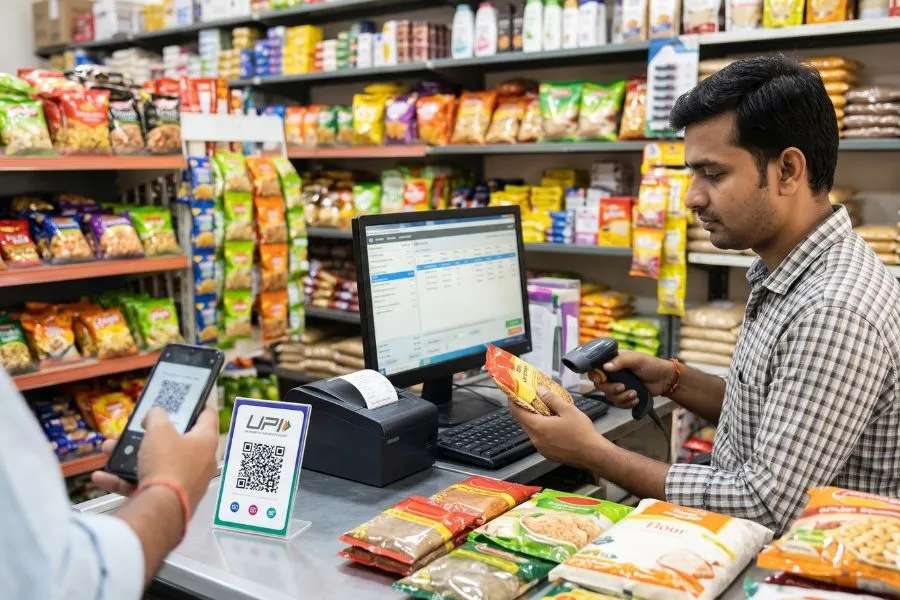
Picture two schools, both with 700 students, both in the same city, both charging similar fees.
School A — Without Fee Collection Software:
Monday morning, first day of the second term. The fee collection office opens at 8:30 AM. By 9:00 AM, there are 35 parents waiting in a queue. Each collection takes 10-12 minutes — finding the student record, computing what's due across 9 fee heads, applying the applicable concession, issuing a handwritten receipt, updating the register.
By noon, 28 parents have been served. 7 are still waiting. Three parents have called to ask when fees are due. Two have questioned their bills (the accounts clerk miscalculated the sibling concession). One parent needs a duplicate receipt from last term — which requires searching through 300 paper receipts.
Monthly fee reconciliation will take 3 days. Identifying defaulters will take another 2 days. The finance committee meeting next week will wait for these numbers.
School B — With Fee Collection Software:
Same Monday morning. Zero queue at the fee office. Why?
68% of parents (476 of 700) paid online over the weekend — from their phones, after getting a WhatsApp reminder on Saturday. Each of those 476 parents took 90 seconds on their phone, received a WhatsApp receipt instantly, and never visited the school office.
The remaining 32% who prefer paying in person are processed at the counter in 2-3 minutes each. Receipts printed and WhatsApp-delivered immediately.
The accounts team's morning: 20 minutes reviewing the overnight online collection report. The principal opens the management app: "68.4% of Q2 fees collected. ₹14.2 lakh outstanding. 94 students with dues." All real-time.
That is the difference school fee collection software makes.
This complete guide covers everything Indian school administrators, principals, finance managers, and education trustees need to know about school fee collection software — from the features that matter most to the ROI that justifies the investment.
Use ERP Group's Free ROI Calculator → to calculate how much your school can improve fee collection efficiency.
The Indian School Fee Collection Challenge
Understanding the Scale and Complexity
Why School Fee Collection is India's Most Complex Service Revenue Challenge
School fee collection in India is not a simple billing function. It is a highly complex revenue management operation with several India-specific characteristics:
Complexity 1 — Multi-Fee-Head Structure:
A typical Indian private school collects 8-12 separate fee components per student: tuition, development, examination, laboratory, library, sports, computer lab, annual function, transport, and hostel. Each has a different amount per class. All must be tracked and collected separately.
Complexity 2 — Class-Wise Differentiation:
Class 1 and Class 10 students pay different tuition fees. Class 11 Science students pay different lab fees than Class 11 Commerce. The fee matrix for a 12-class school can have hundreds of different rate combinations.
Complexity 3 — Concession Complexity:
RTE students (25% free seats), merit scholarship holders, sibling discounts (10-20% for second child), staff ward concessions, need-based concessions — each student may have a unique effective fee different from the standard rate card.
Complexity 4 — Installment Variations:
Quarterly, half-yearly, annual, monthly — different installment plans for different fee heads (tuition quarterly, hostel monthly, development fee annual). Some families pay annual upfront for a discount.
Complexity 5 — Payment Mode Diversity:
Cash, cheque, NEFT, UPI, credit card, online — each mode requires different processing, reconciliation, and accounting treatment.
Complexity 6 — Follow-Up Obligation:
For every unpaid account, the school must follow up — without alienating the family or creating awkwardness for the student. This requires systematic, professional communication — not ad-hoc calling.
The result without software: 3-5 accounts staff working full-time on fee management, 15-20% slower collection, recurring disputes and errors.
For complete school fee management, use ERP Group's School Management Software →.
For school fee management detailed guide, read our guide on student fee management software India.
For school ERP complete guide, read our guide on school ERP software India 2026 complete guide.
What is School Fee Collection Software
The Digital Fee Management Platform
School Fee Collection Software — Definition
School fee collection software is a specialized digital platform that automates and streamlines the complete fee collection cycle for educational institutions:
Fee Structure Management: Configure all fee heads, class-wise rates, installment schedules, and concession types — once at the start of the year.
Automatic Student Fee Assignment: Each student's fee bill automatically calculated based on their class, transport route, hostel category, and applicable concessions.
Online Collection: Parents pay via app, website, UPI, card, or net banking — 24/7 without staff involvement.
Automated Reminders: WhatsApp and SMS reminders sent automatically before and after due dates — to all students simultaneously.
Digital Receipts: Receipt generated and WhatsApp-delivered within 30-60 seconds of every payment.
Defaulter Management: Real-time defaulter dashboard with systematic follow-up automation.
Analytics: Collection rate, outstanding analysis, payment mode trends — all real-time on management dashboard.
Accounting Integration: Every collection automatically posted to correct accounting heads — zero manual reconciliation.
GST Compliance: Educational fee heads pre-classified as exempt. Commercial school services (canteen, uniform) correctly taxed with GSTR-1 auto-generated.
For complete school fee collection software, use ERP Group's School Management Software →.
For school management software features, read our guide on school management software India features and benefits.
The 10 Core Features Every School Fee Collection Software Must Have
The Non-Negotiable Feature Set
Why All 10 Features Are Essential
School fee collection software is only as effective as its least capable feature. A system with excellent online payment but poor concession management will still have disputes and errors. A system with great reminders but no accounting integration will still have reconciliation problems.
The 10 features below represent the complete, non-negotiable feature set for any serious school fee collection software in India.
Feature 1 — Multi-Fee-Head Structure with Class-Wise Rates
The Foundation That Makes Everything Work
Configuring the Complete Fee Structure
Fee Head Master:
Every fee component configured as a separate fee head with:
- Fee head name
- Collection frequency (annual, quarterly, monthly)
- Class-wise amount matrix
- GST classification (exempt for educational services, taxable for commercial)
Sample Fee Structure Configuration:
FEE STRUCTURE 2026-27

TUITION FEE (Quarterly):
  Class 1-2: ₹10,500/quarter
  Class 3-5: ₹11,500/quarter
  Class 6-8: ₹13,500/quarter
  Class 9-10: ₹16,500/quarter
  Class 11-12 (Science): ₹19,500/quarter
  Class 11-12 (Commerce): ₹17,500/quarter
  Class 11-12 (Arts): ₹15,500/quarter

DEVELOPMENT FEE (Annual, paid in Q1):
  All Classes: ₹8,000/year

TRANSPORT FEE (Monthly, charged quarterly):
  Route A (0-5 km): ₹1,200/month = ₹3,600/quarter
  Route B (5-10 km): ₹1,500/month = ₹4,500/quarter
  Route C (10+ km): ₹1,800/month = ₹5,400/quarter
Auto-Assignment:
When a student is enrolled in Class 7B on Route B → Fee automatically assigned:
- Tuition: ₹13,500
- Transport: ₹4,500
- Development: ₹8,000 (Q1 only)
- Other fee heads per Class 7 rates
Zero manual calculation for fee demands from that point.
For school fee structure accounting, use ERP Group's accounting software →.
For GST on school fees, read our guide on GST on educational services India complete guide.
Feature 2 — Online Payment Gateway Integration
The Feature That Transforms Collection
How Online Payment Works in Indian School Fee Software
The Payment Journey for Parents:
Step 1: Parent receives WhatsApp reminder "Q2 fee of ₹28,500 for Aditya Kumar (Class 8B) is due on October 1. Pay online: [link]"
Step 2: Parent clicks link → Opens school payment portal (mobile-optimized)
Step 3: Parent sees:
OUTSTANDING FEE — Aditya Kumar | Class 8B
Q2 2026-27

  Tuition Fee:         ₹13,500
  Transport Fee:        ₹4,500
  Computer Lab Fee:     ₹1,500
  Library Fee:          ₹600
  Sports Fee:           ₹900
  Examination Fee:      ₹500
  ───────────────────────────
  Gross:               ₹21,500
  Sibling Discount:    -₹1,350 (applied automatically)
  Late Fee:              ₹0 (paying before due date)
  ───────────────────────────
  Total Due:           ₹20,150
Step 4: Parent selects payment mode:
- PhonePe / Google Pay (UPI)
- Credit/Debit Card
- Net Banking
- Other UPI
Step 5: Payment completed → Instant confirmation
Step 6: WhatsApp receipt arrives in 30-45 seconds
Impact on collection efficiency:
- Parents who previously delayed "until they came to school" now pay immediately from home
- 70-80% online adoption (national average after 3-6 months) → 70-80% of collections with ZERO staff involvement
- Available 24/7 — parents pay at 10 PM, 7 AM, Sunday morning
Payment Gateway Options:
ERP Group's school fee software integrates with:
- Razorpay
- PhonePe Business
- PayU
- CCAvenue
- Paytm Business
MDR (Merchant Discount Rate):
Online payments carry processing fees (0.5-2%). Schools either absorb this as a convenience cost (justified by staff savings) or add as a nominal convenience fee to parents.
For school online payment, use ERP Group's School Management Software →.
Feature 3 — Automated WhatsApp and SMS Reminders
The Collection Improvement Engine
The Automated Reminder Sequence That Collects More
Why Reminders Are the Highest-ROI Feature:
Most parents who pay fees late are not intentionally defaulting — they forget. A well-timed, professional reminder at the right moment converts "I'll pay when I get a chance" to "Let me pay right now."
The Automated Reminder Sequence:
T-7 Days (7 days before due date):
[School Name] 📚
Dear Mrs. Gupta,
Friendly reminder: Rahul's Q2 fees of ₹24,500 are
due on October 1, 2026.

Pay online instantly (no queue, 2 minutes):
[Payment Link]

Or visit: School Fee Office, Mon-Sat 9AM-3PM
Thank you! 🙏
T-1 Day (Day before due date):
[School Name] ⏰
Tomorrow is the last day for Q2 fee payment for
Rahul Gupta (Class 9A) — ₹24,500 due October 1.

Pay now to avoid late fees:
[Payment Link]
Day 0 (Due date) — Evening if not paid:
[School Name]
Today was the last day for Q2 fees for Rahul (₹24,500).
A late fee of ₹100 per week applies from tomorrow.

Pay tonight:
[Payment Link]
D+7 (First week overdue):
[School Name]
Rahul Gupta (Class 9A) fee of ₹24,500 is now 7 days
overdue. Late fee of ₹100 has been applied.

Outstanding: ₹24,600. Pay now:
[Payment Link]

Please call 98XXXXXXXX if you have any concerns.
D+30 (Month overdue):
Escalated reminder — may be from principal's account rather than generic system message.
The Collection Impact:
| Without Reminders | With Automated Reminders |
|---|---|
| Collection by due date: 62-72% | 85-92% |
| Requires staff calling: 15-20 hrs/month | 0 hours |
| Parent experience: Random calls | Professional, expected communication |
For ₹60 lakh annual fee target: 10% improvement = ₹6 lakh additional collected on time
Feature 4 — Digital Receipt Generation and Delivery
Professional, Instant, Compliant Receipts
The Automated Receipt That Parents Love
Receipt Requirements for Indian Schools:
A school fee receipt must:
- Be sequentially numbered (for audit and accounting)
- Show student name and class
- Itemize each fee head separately
- Show any concessions applied
- Confirm payment mode and amount
- Confirm zero outstanding (or remaining balance)
- Be GST-compliant (showing exempt status for educational fees)
Digital Receipt Format:
━━━━━━━━━━━━━━━━━━━━━━━━━━━━━━━
[SCHOOL NAME] — OFFICIAL FEE RECEIPT
━━━━━━━━━━━━━━━━━━━━━━━━━━━━━━━
Receipt No: 2026-27/Q2/4521
Date: October 5, 2026 | 14:32:07

Student: Rahul Gupta | Class 9A
Admission No: 2018-0187

Q2 2026-27 FEE RECEIPT:
  Tuition Fee: ₹16,500
  Transport Fee (Route B): ₹4,500
  Computer Lab: ₹1,500
  Library: ₹600
  Sports: ₹900
  Exam Fee: ₹500
  ─────────────────────
  Gross: ₹24,500
  Sibling Concession: -₹0
  Late Fee: ₹0
  ─────────────────────
  RECEIVED: ₹24,500

  Payment: UPI (Google Pay)
  Ref: TXN2026100512345

GST: NIL — Educational services exempt
  (Notification 12/2017-CT(Rate))

Balance: ₹0 (Fully paid for Q2)
Next Due: Q3 | January 1, 2027
━━━━━━━━━━━━━━━━━━━━━━━━━━━━━━━
Delivery Channels:
- WhatsApp: PDF sent to parent's registered mobile within 30-60 seconds
- Email: Simultaneously to parent's email
- App: Available in parent app's payment history
- Print: For counter payments (thermal or A4 print)
Duplicate Receipt:
Parent lost receipt? Search by student name → Resend WhatsApp PDF in 20 seconds.
For fee receipt accounting, use ERP Group's accounting software →.
For GST invoicing for taxable school services, use ERP Group's GST invoicing system →.
Feature 5 — Concession and Scholarship Management
Managing Every Type of Fee Reduction Systematically
The Complete Concession Management System
Indian private schools manage a diverse array of concessions that create unique per-student fee amounts:
Concession Types and Management:
RTE (Right to Education) — 25% Free Seats:
- 25% of seats in Classes 1-8 reserved for EWS/disadvantaged children
- Fee: Zero (fully covered by government reimbursement)
- Software tracks: RTE student list, government reimbursement received, outstanding RTE reimbursement
- Annual RTE reimbursement documentation generated automatically
Merit Scholarship:
- Percentage discount on academic fees
- Condition: Maintain minimum % in annual examination
- Software: Auto-applies scholarship, tracks eligibility annually, auto-revokes if condition not met
Sibling Concession:
- Second child: 10% discount
- Third child: 20% discount
- Software: Automatically identifies siblings (same parent contact or family ID), applies correct tier discount to younger sibling
Staff Ward Concession:
- Children of school teachers/staff get 50-100% tuition discount
- Software: Links employee record to student record, auto-applies concession, auto-revokes on staff resignation
Management/Trustee Quota:
- Completely free or heavily discounted
- Requires trustee authorization in system
- Full audit trail of management concessions
Need-Based Concession:
- Applied case-by-case with principal approval
- Fixed term (annual review)
- Amount/percentage varies
Concession Application Workflow:
- Concession type selected from master list
- Applicable fee heads and percentage configured
- Effective date and review date set
- Approval from configured authority (principal, trustee)
- Applied automatically to student's fee demands from effective date
- Audit trail: Who applied, who approved, on what date, justification
Concession Analytics for Management:
- Total fee forgone through concessions: ₹X lakh/year
- By concession type (RTE, scholarship, sibling, staff, management)
- RTE reimbursement receivable vs received
- Impact on school revenue target
For concession management and school accounts, use ERP Group's accounting software →.
For CA advisory on school concessions and RTE compliance, use ERP Group's CA Partner Program →.
Feature 6 — Defaulter Management and Follow-Up
Systematic Recovery of Outstanding Fees
Professional Defaulter Management
The Defaulter Dashboard:
FEE DEFAULTER DASHBOARD — October 5, 2026
Q2 2026-27 | Due Date: October 1, 2026

OVERALL STATUS:
  Total Students: 712
  Fully Paid: 578 (81.2%)
  Partial Payment: 47 (6.6%)
  Unpaid: 87 (12.2%)

  Total Outstanding: ₹24,35,000

BY DURATION:
  1-7 days overdue: 87 students | ₹21,85,000
  8-30 days overdue: 0 (term just started)
  >30 days (Q1 carry-forward): 18 students | ₹2,50,000

BY CLASS:
  Class 12: 14 students | ₹5,18,000 (highest)
  Class 11: 12 students | ₹3,96,000
  Class 10: 10 students | ₹2,90,000
  ...
Defaulter Actions:
Bulk Reminder (One Click):
Select all 87 unpaid students → Send bulk WhatsApp reminder → All 87 parents receive reminder simultaneously → Zero staff effort.
Segmented Reminders:
Send different messages for different durations:
- 1-7 days: Friendly reminder
- 8-30 days: More urgent, mention late fee
-
30 days: Request to meet accounts staff
Individual Actions:
Click any defaulter → Full payment history → Note field for staff to record: "Called parent Oct 5 — parent said will pay by Oct 10. Next follow-up: Oct 11."
Fee Hold:
Mark student fee status as "Hold" → When TC, marksheet, or any document requested → System shows "FEE OUTSTANDING: ₹X" → Document not released without principal override.
Payment Plan:
For families with genuine hardship → Enter payment plan (₹8,000 on Oct 15, ₹8,000 on Nov 1, ₹8,500 on Nov 15) → System tracks compliance → Alert if payment not received on plan date.
For CRM-based parent follow-up, use ERP Group's CRM software →.
Feature 7 — Fee Collection Analytics Dashboard
Real-Time Financial Intelligence
The Analytics That Drive School Finance Decisions
Real-Time Collection Dashboard:
FEE COLLECTION DASHBOARD — October 5, 2026

CURRENT TERM (Q2 2026-27):
  Term Target: ₹1,08,24,000
  Collected: ₹87,91,500 (81.2%)
  Outstanding: ₹20,32,500
  Late Fee Collected: ₹45,000

TODAY'S COLLECTION:
  Online (UPI/Card): ₹6,45,000 (73.8%)
  Cash at Counter: ₹1,54,000 (17.6%)
  Cheque: ₹75,000 (8.6%)
  Total Today: ₹8,74,000

DEFAULTERS:
  New defaulters (>7 days): 87
  Chronic defaulters (>30 days): 18
  Oldest outstanding: 95 days

YEAR-TO-DATE:
  Q1 Target: ₹1,08,24,000 | Collected: ₹1,05,80,000 (97.8%)
  Q2 Target: ₹1,08,24,000 | Collected: ₹87,91,500 (81.2%)
Trend Analytics:
Collection Rate by Term (Last 4 Years):
Q2 term collection rate has improved from 76.3% (2022-23) to 81.2% (2026-27 current) — reflecting online payment adoption driving improvement.
Payment Mode Trend:
Online payment share has grown from 8% (Year 1 of software) to 73.8% (current) — showing progressive parent adoption.
Class-Wise Outstanding:
Which classes have the most outstanding? Useful for principal to address through class teachers.
Fee Head Analysis:
Which fee heads have higher default rates? (Often transport fee has higher default because families drop transport mid-term.)
Weekly Collection Graph:
Visual chart of collection by week — identifies if collection is front-loaded (most pay in first week) or spread out.
For complete financial analytics, use ERP Group's ROI Calculator →.
For income tax planning for school business income, use ERP Group's Income Tax Calculator →.
Feature 8 — Accounting Integration
From Fee Collection to Financial Statements — Automatically
How Fee Collection Integrates with School Accounting
The Manual Gap Without Integration:
Most Indian schools use separate systems for fee collection and accounting. This creates:
- Daily manual data entry (fee register → accounting software)
- Reconciliation discrepancies (fee records vs accounting records)
- Month-end reconciliation nightmare
- Delayed financial reporting
With Integrated Fee Collection and Accounting:
Every payment → Automatically creates accounting entry:
Student: Rahul Gupta pays ₹24,500 Q2 fee (October 5, 2026)

AUTO JOURNAL ENTRY:
Dr. Bank Account — State Bank Main: ₹24,500
  Cr. Tuition Fee Income — Class 9: ₹16,500
  Cr. Transport Fee Income: ₹4,500
  Cr. Computer Lab Fee Income: ₹1,500
  Cr. Library Fee Income: ₹600
  Cr. Sports Fee Income: ₹900
  Cr. Examination Fee Income: ₹500
Integration Benefits:
- Fee report exactly matches accounting ledger (no reconciliation)
- Outstanding fee = Accounts receivable (automatically accurate)
- Month-end P&L includes accurate fee revenue without manual entry
- Bank reconciliation: Match bank statement against system records (2 hours vs 2 days manually)
For school accounting integration, use ERP Group's accounting software →.
For educational institution accounting guide, read our guide on educational institution accounting software India.
Feature 9 — GST Compliance for School Fees
Built-In Compliance for India's Fee Structure
How Fee Collection Software Handles School GST
The GST Framework for School Fee Collection:
What is GST-Exempt:
Under Notification 12/2017-CT(Rate) — all standard school fee components are exempt:
- Tuition fee: EXEMPT
- Development fee: EXEMPT
- Examination fee: EXEMPT
- Lab fee: EXEMPT
- Library fee: EXEMPT
- Sports fee: EXEMPT
- Student transport fee: EXEMPT
- Student hostel fee (school-operated): EXEMPT
What Attracts GST:
- Uniform sales to students: 5% GST
- Stationery sold at school shop: 12% GST
- Commercial canteen (open to staff/public): 5% GST
- Hall rental to outside parties: 18% GST
How Fee Collection Software Handles This:
Pre-Classification:
All educational fee heads configured as GST-exempt. Commercial sales configured with correct GST rate. Zero manual classification per transaction.
Receipt Format:
Exempt fee receipts correctly show "GST: NIL — Educational services exempt under Notification 12/2017-CT(Rate)" — legally compliant.
GSTR-1 Generation:
If the school has any taxable commercial activities — software auto-generates GSTR-1 including taxable transactions only. Educational fee income correctly excluded.
For school GST compliance calendar, use ERP Group's GST Calendar →.
For SAC codes for school services, use ERP Group's HSN/SAC Finder →.
For complete GST guide for schools, read our guide on GST on educational services India complete guide.
For GSTR-1 auto-generation, read our guide on how to generate GSTR-1 automatically India.
Feature 10 — Multi-School and Multi-Branch Management
For School Groups and Education Trusts
Group-Level Fee Management
For education trusts running multiple schools — centralized fee management with school-specific operations:
Group Architecture:
- Each school maintains its own fee structure (may differ between schools)
- Separate GSTIN if applicable per school
- Separate fee collection per school
- Consolidated group-level reporting
Cross-School Analytics:
- Total group fee collection: ₹X crore
- School-wise collection efficiency comparison
- Which school has highest default rate?
- Group-level fee revenue trend
Common Student Transfer:
If a student transfers from School A to School B (within the group):
- Student record and UHID transferred
- Fee history visible in new school
- No re-registration required
For multi-school management, use ERP Group's School Management Software →.
For school group HR and payroll, use ERP Group's HR & Payroll software →.
Before and After: The Fee Collection Transformation
The Measurable Change Software Delivers
The Complete Comparison for a 700-Student School
FEE COLLECTION PROCESS:
| Activity | Without Software | With Software | Saving |
|---|---|---|---|
| Counter billing per student | 10-12 min | 2-3 min | 8-9 min/student |
| Monthly reminder calls | 20-30 hours | 0 (automated) | 20-30 hours |
| Monthly reconciliation | 3-4 days | 2-3 hours | ~3 days |
| Defaulter report preparation | 4-5 hours/month | Real-time | 4-5 hours |
| Duplicate receipt request | 15-20 min | 30 seconds | 15 min/request |
| Annual fee revision | 3-4 days | 2-3 hours | ~3 days |
COLLECTION RATE:
| Metric | Without Software | With Software |
|---|---|---|
| Collection by due date | 62-72% | 83-91% |
| Collection within 30 days | 78-85% | 93-97% |
| Chronic defaulters (>90 days) | 8-12% | 1-3% |
| Online payment adoption | 0% | 65-75% (after 6 months) |
For ₹70 lakh annual fee target:
12% improvement in on-time collection = ₹8.4 lakh additional collected annually without any staff calling
PARENT EXPERIENCE:
| Parent Need | Without Software | With Software |
|---|---|---|
| Pay fees | Visit school during office hours | App, 24/7 |
| Get duplicate receipt | Visit school, wait | WhatsApp, 30 seconds |
| Check outstanding | Call school, wait | App, instant |
| Know due date | Remember or call | Auto-reminder |
| Confirm payment | Call next day | WhatsApp receipt, instant |
Online Fee Payment — The Game-Changing Feature
Why Online Payment Changes Everything
The Economics of Online Fee Payment for Schools
The Traditional Fee Collection Economics (700 students, quarterly collection):
Staff required: 3 fee collection staff
Monthly salary: ₹20,000 × 3 = ₹60,000/month
Peak collection day workload: 40-50 parents
Queue wait time: 30-60 minutes per parent
Collection efficiency: 72% by due date
With Online Fee Payment (after 6 months of software):
Online payment adoption: 68% of parents
Staff required at counter: 1 fee staff (handles remaining 32%)
Monthly salary: ₹20,000 × 1 = ₹20,000/month
Staff saving: ₹40,000/month = ₹4.8 lakh/year

Queue wait time: Near zero (counter handles 32% of smaller volume)
Collection efficiency: 87% by due date
Additional collected: 15% × ₹70 lakh = ₹10.5 lakh/year
The Online Payment Timeline:
| Month | Online Adoption | Counter Volume |
|---|---|---|
| Month 1 | 15-20% | 80-85% still at counter |
| Month 3 | 35-45% | 55-65% at counter |
| Month 6 | 60-70% | 30-40% at counter |
| Month 12 | 70-80% | 20-30% at counter |
Why adoption grows gradually:
Parents initially sceptical ("Will the receipt reach? Is it safe?") try once, get instant WhatsApp receipt, see it works → Switch permanently to online.
Driving faster adoption:
- Reminder messages include direct payment link (one-click)
- First-time payer gets a follow-up "Your payment was received successfully" confirmation
- School office actively tells parents at the counter: "Next time, pay on the app — faster!"
For online payment integration, use ERP Group's School Management Software →.
For POS billing for counter payments, use ERP Group's POS software →.
WhatsApp Fee Reminders — How They Work
The Most Effective Collection Tool in Indian Schools
WhatsApp as the Primary Collection Communication Channel
Why WhatsApp (Not Email or SMS) is Primary for Indian Schools:
| Channel | Open Rate | Response Rate | Best for |
|---|---|---|---|
| 95-98% | 40-60% | Primary communication | |
| SMS | 70-85% | 15-25% | Backup for non-WhatsApp users |
| 20-35% | 5-10% | Formal notices, receipts | |
| App notification | 60-75% | 20-30% | Logged-in users |
WhatsApp is India's dominant communication channel — with 500+ million active users — making it the natural choice for school-parent communication including fee reminders.
Setting Up WhatsApp Fee Reminders:
Step 1: Each parent's WhatsApp number captured at student registration.
Step 2: School's WhatsApp Business account configured in software (or integration via WhatsApp Business API for automated messaging).
Step 3: Reminder schedule configured:
- T-7, T-1, D+1, D+7, D+15, D+30
- Message templates created (can be customized per school)
Step 4: System sends automatically — no staff action required.
Receipts via WhatsApp:
Every payment → PDF receipt → WhatsApp delivery → Delivery confirmation logged.
Two-Way Communication:
Some parents reply to WhatsApp reminders:
- "Will pay by 10th" → Staff can log this as payment commitment in the system
- "I've already paid, please check" → Staff verifies and replies
Compliance Note:
WhatsApp Business API requires proper setup and approval from WhatsApp/Meta. Schools should use compliant business integration through their software vendor.
For complete parent communication, use ERP Group's CRM software →.
For school management with WhatsApp, use ERP Group's School Management Software →.
Fee Collection for Different School Types
Tailored Approaches for Different Institutions
Fee Collection for CBSE Schools
Profile: 400-1,200 students, Class 1-12, quarterly fee collection, 8-12 fee heads.
Priority features:
- Class-wise fee matrix (different rates per class)
- Quarterly installment management
- Online payment gateway
- Automated reminders
- CBSE-format receipts
- Accounting integration
CBSE-specific consideration: CBSE schools must maintain fee receipt records in a format acceptable for CBSE affiliation inspection.
For CBSE school management, use ERP Group's School Management Software →.
Fee Collection for Residential Schools (Boarding Schools)
Profile: 300-1,000 students, hostel fee dominant, complex billing (room + meals + academic).
Special requirements:
- Hostel fee by room category (4-bed, 2-bed, single)
- Meal plan fee management
- Mid-term enrollment pro-rata calculation
- Exeat permission conditional on fee clearance
- Parent app for boarding students (distance communication)
For residential school management, use ERP Group's School Management Software →.
For hostel fee accounting, use ERP Group's accounting software →.
Fee Collection for Coaching Institutes and Tutorials
Profile: 50-2,000 students, monthly or batch-wise fee, GST-applicable (18%).
Special requirements:
- Batch-based fee structure (different courses, different fees)
- Monthly collection
- 18% GST on all fees (coaching is NOT exempt from GST)
- GST invoice to students
- GSTR-1 including all coaching fees
Critical distinction: Coaching institutes MUST charge 18% GST on fees — they are not "educational institutions" under GST law. See our complete guide on GST on educational services India complete guide.
For coaching institute GST invoicing, use ERP Group's GST invoicing system →.
For coaching GST calendar, use ERP Group's GST Calendar →.
The ROI of School Fee Collection Software
The Financial Return That Makes the Case
Complete ROI Analysis — 700-Student School
School Profile: 700 students, annual fee ₹70 lakh, 3 fee staff, 4 quarterly collections.
ROI Stream 1 — Improved On-Time Collection:
Current: 72% collected by due date
With software (after 12 months): 88%
Improvement: 16 percentage points
On ₹70 lakh: ₹11.2 lakh additional annual collection (in cash, not revenue — money that was eventually collected but much later)
Reduced bad debt: 8% currently → 2% with software
Bad debt reduction: 6% × ₹70 lakh = ₹4.2 lakh/year recovered
ROI Stream 2 — Staff Efficiency:
Current: 3 fee staff for 700 students
With software: 1.5 fee staff (1 full-time + half of accounts person)
Staff saving: 1.5 positions × ₹20,000/month = ₹30,000/month
Annual staff saving: ₹3.6 lakh
ROI Stream 3 — Administrative Time:
Fee reconciliation: 3 days/month → 2 hours/month
Defaulter calls: 20-25 hours/month → 0 (automated)
Annual function fee collection event: 1 day → 30 minutes
Annual tally equivalent (accounts staff time): ₹2 lakh/year
ROI Stream 4 — Late Fee Collection:
Systematic late fee application and collection: ₹50,000-1,00,000/year that was previously missed or waived informally.
ROI Stream 5 — Parent Satisfaction and Retention:
Estimated 3% reduction in fee-friction-related transfers (parents changing schools because the school is "too inconvenient"):
3% × 700 students × ₹1,000 (admission revenue) = ₹21,000 (small, but real)
Better parent experience → Better word-of-mouth → Better new admissions: Conservative estimate ₹2-3 lakh
Total Annual ROI:
- Collection improvement: ₹11.2 lakh
- Bad debt reduction: ₹4.2 lakh
- Staff savings: ₹3.6 lakh
- Admin time: ₹2 lakh
- Late fee: ₹0.75 lakh
- Retention/admissions: ₹2 lakh
- Total: ₹23.75 lakh
Typical fee collection software cost (700 students, part of school ERP): ₹5,000-10,000/month = ₹60,000-1,20,000/year
Net ROI: ₹22.5-23 lakh | Payback: Under 3 weeks
For detailed ROI calculation for your school, use ERP Group's ROI Calculator →.
Common School Fee Collection Problems and Solutions
From Problem to Prevention
Problem 1 — Long Queues on Collection Day
The Problem:
First Monday of the term — 40-60 parents in queue. Parents wait 30-60 minutes. Some leave without paying (increasing default rate). Staff overwhelmed. Creates negative impression.
The Software Solution:
Online payment available 24/7. Most parents pay over the weekend before the first Monday. Reminder sent Saturday morning with payment link. By Monday, 65-70% have paid online. Counter queue: 30% of volume, served in 15-20 minutes. Zero frustrated parents.
Problem 2 — Wrong Fee Calculation Creating Disputes
The Problem:
Accounts staff manually calculates fee for a student with 3 concurrent concessions (RTE waiver + sibling discount + father is contract staff). Gets the calculation wrong. Parent disputes. Embarrassing situation.
The Software Solution:
All concessions configured for the student at enrollment time. Fee calculated automatically. Zero manual computation for any student's bill. Disputes eliminated.
Problem 3 — Cheque Bouncing Not Tracked
The Problem:
50 parents pay by cheque in the first week of term. Receipts issued. 3 weeks later, 8 cheques bounce. Accounts discover at bank reconciliation — 3 weeks after the fact.
The Software Solution:
Cheque payments marked as "pending clearance" — not recognized as collected until bank confirms clearance. Alert when any cheque is returned. Immediate follow-up protocol initiated.
Problem 4 — Fee Documents Issued Despite Outstanding Dues
The Problem:
A Class 12 student with ₹35,000 outstanding fees applies for a TC (Transfer Certificate) before board results. Staff issues TC. Student (and money) gone.
The Software Solution:
"Fee Hold" system. Any document request (TC, marksheet, migration certificate, bonafide certificate) — system automatically checks fee status. If outstanding → Document blocked → Principal override with documented justification required.
Problem 5 — Manual GST Errors on School Services
The Problem:
School canteen and uniform shop generate ₹12 lakh/year in taxable revenue. Accounts staff sometimes charges 12% on uniforms (should be 5%), sometimes doesn't charge GST on canteen sales open to staff. GSTR-1 errors accumulate.
The Software Solution:
All commercial services pre-configured with correct GST rates. POS system for canteen automatically applies 5% GST. Uniform sales automatically apply 5% GST. GSTR-1 auto-generated correctly from all transactions. Zero manual GST classification.
For GSTIN verification for school suppliers, read our guide on how to validate GSTIN of supplier India.
For TDS on school staff salaries, use ERP Group's TDS Calculator →.
For staff salary planning, use ERP Group's Salary Calculator →.
How Fee Collection Integrates with Complete School ERP
Fee as Part of the Whole School Platform
The Complete Integration Map
School fee collection delivers maximum value when integrated with the complete school management platform:
Fee + Student Information System:
Student enrolled → Fee structure auto-assigned. Student leaves → Fee clearance checked before TC.
Fee + Transport Module:
Student assigned route → Transport fee auto-added. Route changed → Fee updated. Transport withdrawn → Fee removed next term.
Fee + Attendance Module:
Student with significant fee outstanding → Teacher alerted (for gentle counselling, not public embarrassment).
Fee + Hostel Module:
Student assigned hostel → Hostel fee auto-added. Room change → Fee updated.
Fee + Examination Module:
Exam form eligibility check includes fee clearance. Hall ticket only for fee-paid students.
Fee + Payroll Module:
Staff ward concession linked to employee status. If teacher resigns → Concession auto-revoked → Child's fee bill updated.
Fee + Accounting:
Every collection → Auto-journal entry. Outstanding = Accounts receivable. Concessions = Scholarship expense.
Fee + Management Dashboard:
Fee collection status always visible to principal and trustees without asking accounts staff.
For complete school ERP, use ERP Group's School Management Software →.
For school payroll with integration, read our guide on school payroll software India teacher salary management.
How to Choose School Fee Collection Software India
The 8-Point Evaluation Checklist
What to Test Before You Decide
Test 1 — Multi-Concession Accuracy:
Configure a student with 3 concurrent concessions (RTE + sibling + staff ward). See if the system correctly calculates net fee and applies each concession to the correct fee heads. This is the most complex scenario.
Test 2 — Online Payment Live Test:
Make a test payment from a parent mobile number during the demo. Time the WhatsApp receipt delivery. Should arrive in under 60 seconds.
Test 3 — Reminder Configuration:
Configure a reminder sequence. Send a test reminder to your own phone. Verify WhatsApp delivery and message format. Check if the payment link works.
Test 4 — Accounting Integration:
Make a test payment and see the resulting journal entry in the accounting module. Verify each fee head credits to the correct income account.
Test 5 — GST Handling:
Verify that educational fee components correctly show as GST-exempt on receipts. If your school has a canteen or sells uniforms — verify correct GST rate application.
Test 6 — Defaulter Report:
Generate a defaulter report and see the level of detail: student name, class, due amount by fee head, number of days overdue, last payment date. Verify bulk reminder functionality.
Test 7 — Mobile Accessibility:
Is the parent app available on both Android and iOS? Is the admin/principal dashboard mobile-friendly? Can you check collection status from your phone?
Test 8 — Data Migration:
How will existing student fee data be migrated? What format does the vendor accept? Is there support for migrating outstanding balances from the previous system?
How ERP Group's School Management Software Delivers Complete Fee Collection
India's Most Complete School Fee Collection Platform
ERP Group — India's AI-Powered GST Billing & Cloud ERP Platform — delivers comprehensive school fee collection as the most important module of School Management Software →, purpose-built for Indian school fee complexity.
ERP Group School Fee Collection — Key Differentiators
India-First Fee Structure:
Multi-fee-head matrix supporting every combination of class, category, transport route, hostel type, and concurrent concessions. RTE management with government reimbursement tracking. All Indian concession types supported.
Complete Online Payment:
Razorpay, PhonePe, PayU, CCAvenue integration. UPI, card, net banking. Parent app on Android and iOS. Web payment portal for non-app users.
WhatsApp-First Communication:
Automated reminders at configured intervals. Instant WhatsApp receipts. Delivery confirmation logged. Customizable message templates.
India-Compliant GST:
Educational fee heads pre-classified as GST-exempt. Commercial services (canteen, uniform) correctly taxed. GSTR-1 auto-generated. Zero manual GST effort.
Accounting Integration:
Fee collection → Auto-accounting entries → Fee register = Accounting ledger (always). Month-end reconciliation: Near zero.
Real-Time Management Dashboard:
Principal and trustees see collection progress live. No "prepare a report" delay. Mobile access for on-the-go visibility.
Full ERP Integration:
Fee seamlessly connected to student SIS, attendance, examination, hostel, transport, HR, and accounting — one platform for the complete school.
Complete School Fee Collection Platform
| School Fee Collection Need | ERP Group Solution |
|---|---|
| School fee collection platform | School Management Software |
| GST billing for taxable services | GST Invoicing System |
| Canteen fee POS | POS Software |
| Parent communication CRM | CRM Software |
| Fee accounting integration | Accounting Software |
| School store inventory | Warehouse Management |
| Staff HR and payroll | HR & Payroll Software |
| SAC codes for school services | HSN/SAC Finder |
| GST filing calendar | GST Calendar |
| TDS on school staff | TDS Calculator |
| School income tax | Income Tax Calculator |
| Staff salary planning | Salary Calculator |
| Fee software ROI | ROI Calculator |
| CA advisory for school trust | CA Partner Program |
| School dispensary management | Healthcare & Pharmacy ERP |
Conclusion — School Fee Collection Software is Non-Optional for Indian Schools in 2026
India's school education sector in 2026 is defined by rising parent expectations, digital-first service delivery, and the competitive reality that schools with better administrative processes attract and retain more families than those without.
The Fee Collection Software Impact:
For a 700-student school with ₹70 lakh annual fee target:
- Collection improvement: 16% more collected on time (₹11.2 lakh)
- Bad debt reduction: 6% improvement (₹4.2 lakh)
- Staff efficiency: 1.5 positions freed (₹3.6 lakh)
- Admin time: ₹2 lakh equivalent
- Total annual benefit: ₹23.75 lakh
The Software Cost: ₹60,000-1,20,000/year
The Net Return: ₹22.5-23 lakh | Payback: Under 3 weeks
The 5 Features That Drive the Most Impact:
- Online payment gateway — eliminates 65-75% of counter work
- Automated WhatsApp reminders — adds 10-15% to on-time collection
- Multi-concession management — eliminates calculation errors
- Digital receipt delivery — eliminates receipt-related disputes
- Real-time management dashboard — enables proactive management
Use ERP Group's Free ROI Calculator → to calculate the specific financial impact for your school's fee target and student strength.
ERP Group's School Management Software → delivers India's most complete school fee collection platform — online payment, WhatsApp reminders, multi-concession management, accounting integration, and GST compliance — built specifically for Indian school fee complexity.
Book Your Free Demo — School Fee Collection Software India
👉 Book a Free Demo → — See ERP Group's school fee collection software handle online payment, WhatsApp receipt delivery, multi-concession billing, defaulter management, and collection analytics in one complete demonstration.
👉 Calculate Your ROI → — Find out exactly how much more fee your school can collect with automated fee management.
Related Tools and Guides
- 🔧 School Management Software → — Complete school fee collection platform
- 🔧 GST Calendar → — GST filing deadlines for schools
- 🔧 HSN/SAC Finder → — SAC codes for school fee and services
- 🔧 TDS Calculator → — TDS on school staff salaries
- 🔧 ROI Calculator → — Fee collection software ROI
- 🔧 Salary Calculator → — School staff salary planning
- 📄 Student Fee Management Software India
- 📄 School Management Software India — Features and Benefits
- 📄 GST on Educational Services India — Complete Guide
- 📄 Educational Institution Accounting Software India
- 📄 School ERP Software India 2026 — Complete Guide
© 2026 ERP Group — India's AI-Powered GST Billing & Cloud ERP Platform